Depot Cam
 Override 2026
 Shop 01867
 AI Recaps
 LTE’s
LTE’s Police and Fire Scanner
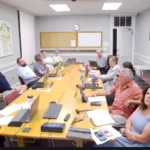
Below is a summarized version of the Finance Committee, organized by timestamps and speakers, focusing on key points raised during the discussion in Reading, Massachusetts. This summary condenses the discussion into major themes, speaker contributions, and decisions, avoiding excessive detail while retaining the essence of the conversation. Timestamps correspond to the video linked at the bottom.
- 📋 Summary
- 📑 Agenda Overview
- 🏢 Administrator / Manager Report
- 💼 Financial Overview
- 💰 Cash, Reserves & Regeneration
- 🗳 Override Scenarios & Tax Impact
- 🧑💼 Staffing, Services & Cost Containment
- 📣 Public Engagement & Compliance
- 🗳 Discussion & Vote – Override Structure & Options
- 🔗 Liaison Reports – Highlights
- ✅ Meeting Minutes Approved
- 🗓 Future Agenda Items
- 🔑 Key Summary
📅 May 20, 2026 Finance Committee Meeting
🕒 Meeting Start: 00:07:28
⏰ Meeting End: 02:24:17
💻 Format: In-person / Hybrid
👤 Chair: Joseph Carnahan
👥 Attendees: Joseph Carnahan, Emily Sisson, Endri Kume, Joseph McDonagh, Marianne McLaughlin-Downing, Edward Ross, John Sullivan, Mark Zarrow, Sharon Angstrom (Chief Financial Officer / Town Accountant), Jacquelyn LaVerde (Executive Assistant), Chris Haley, Melissa Murphy, Karen Rose-Gillis, Karen Herrick
🚫 Absent: None noted
📋 Summary
The Finance Committee held an extended spring financial forum focused on early planning for the FY28 budget and the Town’s growing structural deficit. Chief Financial Officer Sharon Angstrom presented long-range financial projections showing that accommodated costs—particularly benefits, debt service, energy, special education, and new building operating costs—are significantly outpacing revenue growth. Members discussed the sustainability of current budgeting practices, declining regeneration, and constraints on the use of free cash and reserves.
A substantial portion of the meeting centered on potential Proposition 2½ override scenarios, including size, timing, and public communication strategy. The committee reviewed tax impacts, state aid clarifications, and consequences of a failed override, including staffing reductions and service level cuts. The meeting concluded with liaison updates, approval of prior meeting minutes, and scheduling of future meetings. No override vote was taken.
📑 Agenda Overview
| ⏰ Start Time | Topic |
|---|---|
| 00:07:28 | Call to Order & Opening Remarks |
| 00:08:53 | FY28 Budget Overview & Structural Deficit |
| 00:14:21 | Structural Deficit Analysis |
| 00:25:35 | Financial Forecast & Override Scenarios |
| 00:50:01 | Override Impact on Taxpayers |
| 00:58:06 | Failed Override Scenarios & Service Reductions |
| 01:05:10 | Benefits, Staffing, and Cost Containment |
| 01:15:01 | State Aid Clarification & Override Size Discussion |
| 01:27:19 | Override Timing & Election Logistics |
| 01:39:38 | Lessons from Prior Overrides |
| 01:49:49 | Multiple Override Options Discussion |
| 02:10:31 | Future Agenda Planning |
| 02:18:11 | Liaison Reports |
| 02:22:40 | Meeting Minutes & Scheduling |
🏢 Administrator / Manager Report
⏰ 00:08:53 – 02:10:31
👤 Presenter(s): Sharon Angstrom (Chief Financial Officer / Town Accountant)
💼 Financial Overview
- FY28 projected structural deficit estimated at approximately $6–10 million depending on service levels.
- Accommodated costs (benefits, debt, energy, special education, capital) continue to grow faster than revenues.
- Employee benefits account for roughly $3.2 million of recent deficit growth.
- New school and municipal buildings add nearly $1 million annually in operating costs.
💰 Cash, Reserves & Regeneration
- Historical regeneration averaged about $6 million but has declined as budgets tightened.
- FY26–FY27 projections assume approximately $3 million in regeneration with significant free cash usage.
- Reserve policy (7% minimum) limits flexibility.
- Interest income has helped offset costs but is not reliable long term.
🗳 Override Scenarios & Tax Impact
- A baseline override of approximately $7.5–$8 million discussed as the minimum needed to stabilize FY28.
- Larger overrides (up to ~$14 million) modeled to extend fiscal stability into FY30 and beyond.
- A $7.5 million override estimated to increase the average tax bill by roughly $850 annually, excluding future debt exclusions.
- Without an override, FY28 budget growth could be under 1%, necessitating significant staffing and service reductions.
🧑💼 Staffing, Services & Cost Containment
- Failed override scenarios would rely heavily on personnel reductions.
- Potential mitigation strategies include attrition, leaving vacancies unfilled, reduced service hours, deferred maintenance, and contract reductions.
- Recent health insurance plan design changes—the first in decades—aim to slow benefits growth, though costs remain elevated.
📣 Public Engagement & Compliance
- Outreach plan includes a dedicated website, tax impact calculator, webinars, in-person and virtual forums, and media outreach.
- Committee agreed to add an earlier informational forum before the end of June.
- All communications to comply with Office of Campaign and Political Finance rules, providing factual information only.
🗳 Discussion & Vote – Override Structure & Options
⏰ 01:49:49 – 02:10:31
👤 Presenter(s): Finance Committee Members; Sharon Angstrom
Overview
Discussion focused on whether to present one or multiple override options to voters and how to clearly communicate tradeoffs.
Key Discussion Points
- Multiple options could help gauge voter preferences and avoid a second election.
- Concern that too many options may confuse voters or bias outcomes toward the lowest amount.
- Lower override levels would largely maintain baseline services only.
- Higher override levels could restore select services and provide longer-term stability.
- Clear explanation of service impacts (“what’s in / what’s out”) viewed as essential.
- Past override success attributed to specificity, transparency, and trust.
Vote
No formal vote taken; consensus to refine scenarios and return with clearer options.
🔗 Liaison Reports – Highlights
⏰ 02:18:11 – 02:22:40
👤 Presenter(s): Committee Members
- CPA Study Committee: Final report completed; CPA question to appear on the November ballot.
- RMLD Audit Committee: Clean audit reported.
- Killam Project: Bidding period extended to mid-June due to Attorney General concerns over proprietary language.
- Recreation / Elder & Human Services:
- New programming software launched with ~409 users enrolled.
- Over $2,000 collected in initial program fees.
- Eastern Gateway Exploratory Committee: Recommendations progressing toward zoning bylaw language for Town Meeting.
✅ Meeting Minutes Approved
⏰ 02:22:40 – 02:23:30
👤 Presenter(s): Joseph Carnahan
- April 15, 2026 Minutes: Approved as presented
- Vote Count: Unanimous (no recusals noted)
🗓 Future Agenda Items
⏰ 02:23:30 – 02:24:17
👤 Presenter(s): Joseph Carnahan; Jacquelyn LaVerde
- Placeholder meeting on June 17 removed.
- Finance Committee meeting confirmed for June 25, 2026.
- Anticipated focus on refined override options, Level 1 and Level 2 budget scenarios, and joint engagement with the Select Board.
🔑 Key Summary
- FY28 planning begins with a projected $6–10 million structural deficit driven by benefits, debt, energy, and new building costs.
- Regeneration and free cash are declining and cannot sustainably close the gap.
- A $7.5–$8 million override identified as a practical minimum; larger amounts needed for multi-year stability.
- November 3, 2026 identified as the latest feasible and preferred date for an override vote.
- Without an override, staffing reductions and service level cuts would be required.
- Early and transparent public engagement emphasized as critical to voter understanding and trust.
- April 15, 2026 minutes approved; June 25, 2026 meeting scheduled.