Depot Cam
 Override 2026
 Shop 01867
 AI Recaps
 LTE’s
LTE’s Police and Fire Scanner
“Articles 13 and 14 expected to draw most debate at the Annual Town Meeting“
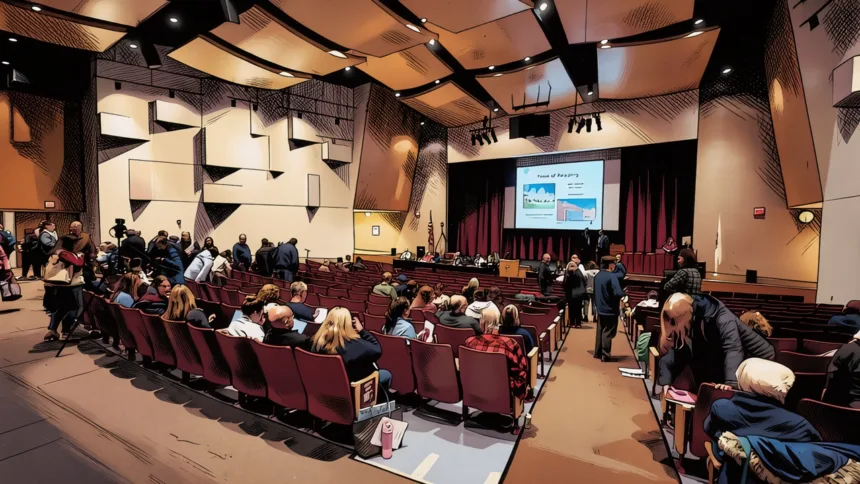
Town Meeting Members will confront a wide-ranging 18-article warrant at Reading’s 2026 Annual Town Meeting, with matters spanning routine governance to major financial commitments, policy changes, and long-term planning initiatives. The meeting is scheduled for tonight, April 27th, at 7:30 p.m. at Reading Memorial High School.
While some articles are procedural or recurring, others could have lasting impacts on town finances, programs, and services.
Governance and Charter Matters
The warrant opens with the election of town officers (Article 1) during the local election earlier in April. Among the positions are Select Board members, School Committee members, Library Trustees, and Town Meeting Members.
One of the most significant ballot items preceding Town Meeting was a proposed Home Rule Charter amendment, which modernizes and clarifies town governance. The changes include renaming the Board of Selectmen to the Select Board, updating notice requirements to allow website publication, revising recall and referendum procedures, and adopting gender‑neutral language. The amendment retains Reading’s representative Town Meeting form of government.
Article 18, the final article, addresses Town Meeting membership itself. Members are asked to vote on whether to remove certain Town Meeting Members who failed to take the oath of office or attend at least half of the required sessions last year, in accordance with the Charter. This has typically resulted in only members who do not request to remain, getting removed.
Capital Planning and Budget Adjustments
Several articles focus on finances and long‑range planning.
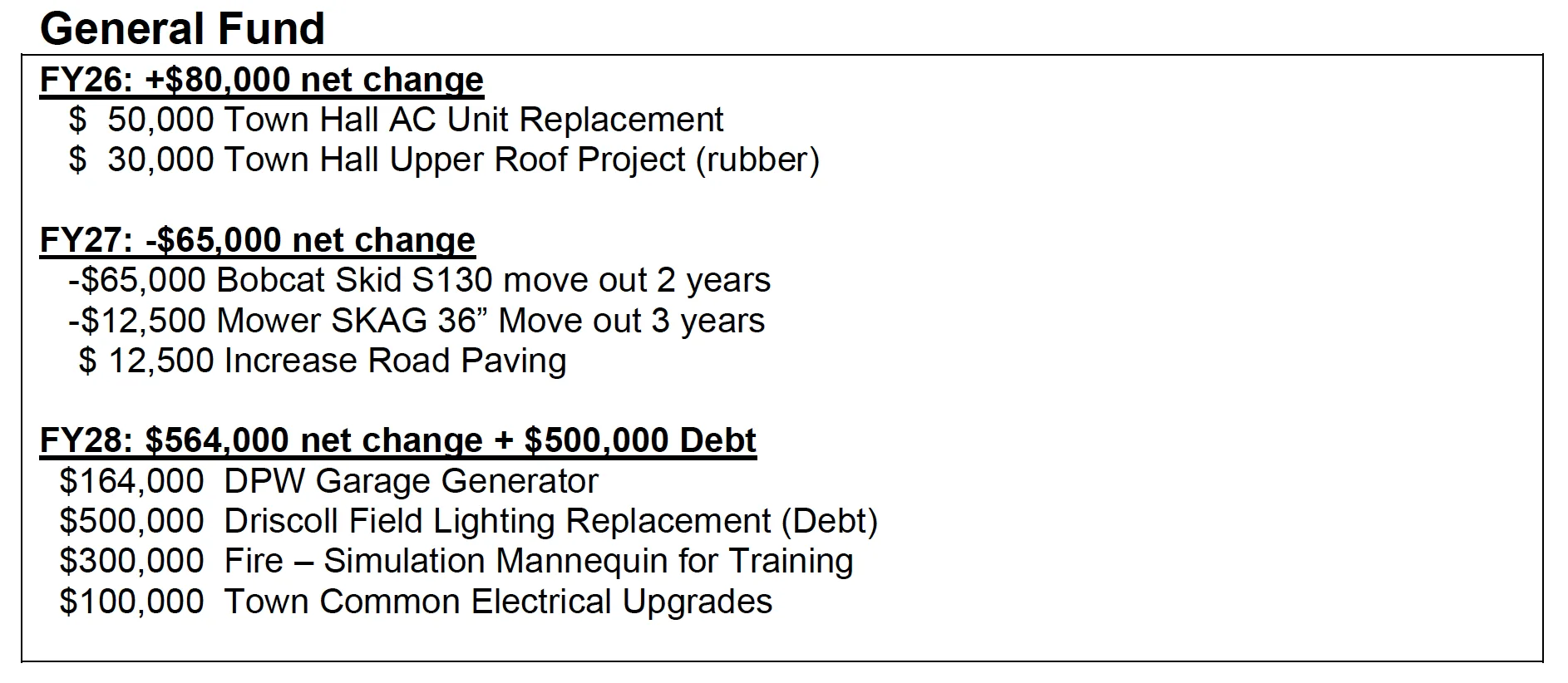
Article 4 amends the town’s FY2026–FY2036 Capital Improvements Program (CIP). Proposed changes include funding for Town Hall HVAC and roof work, DPW equipment adjustments, a DPW garage generator, and major projects such as Driscoll Field lighting replacement. Placement in the CIP does not authorize spending but allows future appropriations.
Article 5 proposes amendments to the current FY2026 budget, adding approximately $1.7 million in net operating expenses, largely driven by higher health insurance costs, police overtime, snow and ice expenses, and veterans’ aid. The increase would be funded entirely with Free Cash.
Article 10 is the core operating budget article, establishing funding for all town departments for FY2027 beginning July 1, 2026. Detailed budget line items are presented in accompanying materials, with the Finance Committee recommending approval.
Trusts, Stabilization, and Debt Management
Article 7 authorizes the annual transfer of previously budgeted funds into the town’s Other Post‑Employment Benefits (OPEB) Trust. The proposed transfer totals $320,500 across the general fund and enterprise funds. The town’s unfunded OPEB liability currently stands at approximately $87.9 million, with the general fund still on a partial funding schedule.
Article 9 seeks to rescind $422,000 in borrowing authority that was issued twice in error for an MWRA project more than a decade ago, correcting the town’s debt authorization records.
Article 14 proposes the creation of two special purpose stabilization funds to support adaptive and therapeutic programming: one for the School Department and one for the Recreation Department. The funds would receive between 25% and 100% of annual lease revenues from the Burbank Ice Arena, split evenly between the two programs.
Revolving Funds and Bylaws
Article 8 sets FY2027 spending limits for multiple revolving funds, including inspections, conservation consulting, library fines, solid waste, and public health clinics. It also updates the Inspection Revolving Fund language to add new development projects as revenue sources.
Article 12 asks whether Reading should adopt a state option allowing restaurants to serve alcohol between 10 a.m. and noon on Sundays and certain holidays, a change requested by local eateries seeking expanded brunch service.
Article 17 updates the town’s Animal Control bylaw to comply with recent changes to state law known as “Ollie’s Law.” The revision expands definitions, clarifies leash and voice control rules, updates kennel licensing requirements, and formalizes enforcement and appeals procedures.
Recreation, Infrastructure, and Community Initiatives
Several articles propose major capital investments.
Article 11 dedicates land on Haverhill Street for recreational use to satisfy requirements tied to a $100,000 state PARC grant supporting the previously approved pickleball project.
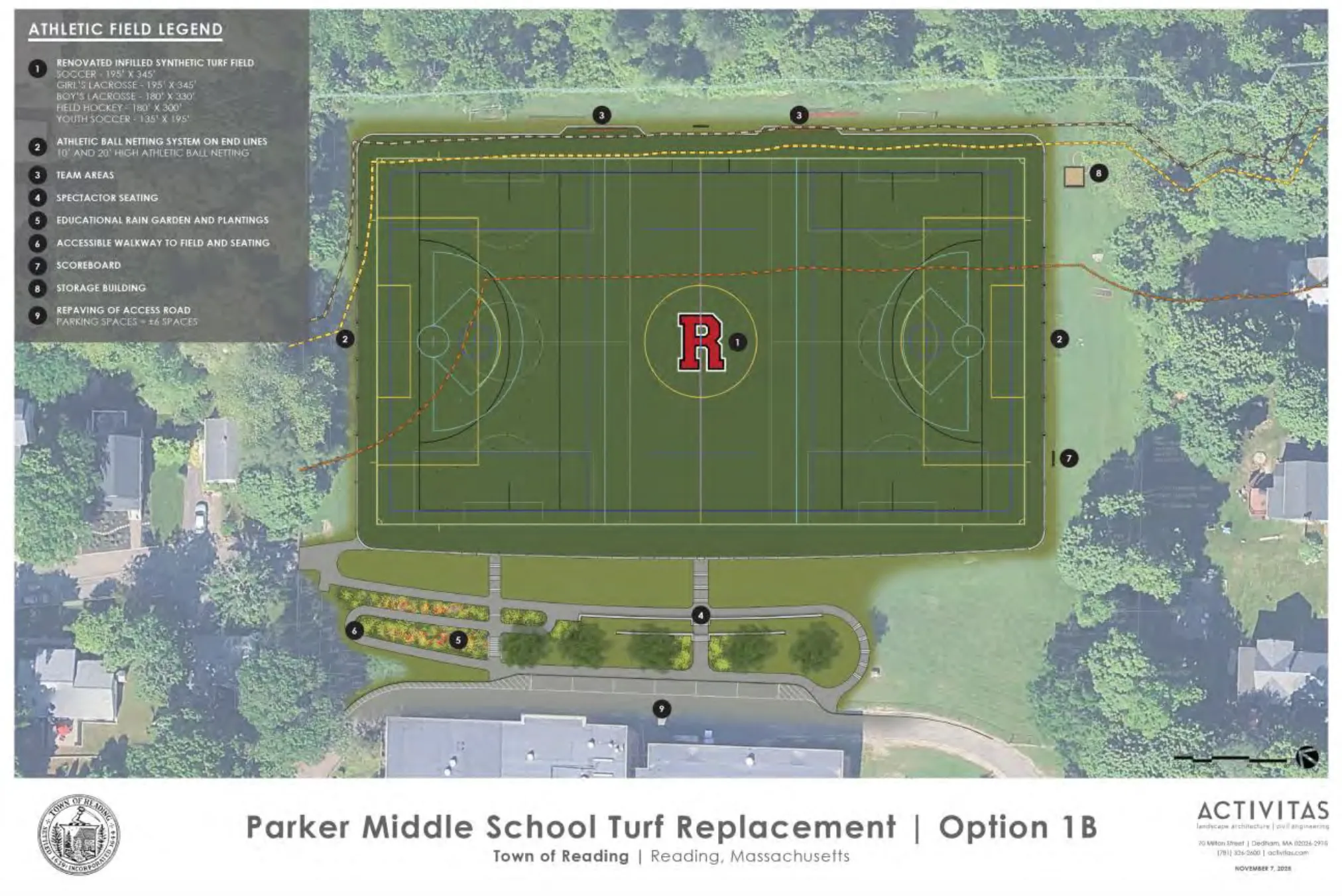
Article 15 seeks $1.7 million for the replacement of the aging synthetic turf field at Parker Middle School’s Collins Memorial Field. The project includes a new shock‑absorbing pad, ADA access improvements, and updated seating.
Article 16 authorizes $3.1 million to replace the Joseph Way and Brewer Lane sewer pump stations, both over 45 years old and identified as top priorities due to operational and reliability issues.
Perhaps the most far‑reaching policy proposal is Article 13, which would place adoption of the Community Preservation Act (CPA) on the November 2026 ballot. The study committee recommends a 1% surcharge with exemptions for commercial and industrial property, qualifying seniors, low‑income residents, and the first $100,000 of assessed value.
What’s Ahead
Together, the 18 warrant articles reflect routine governance, careful financial stewardship, and ambitious long‑term investments. Some votes, such as the CPA question and major infrastructure projects, could shape Reading’s priorities for decades, underscoring the importance of Town Meeting participation this spring.
The complete report on Town Meeting is below: