

In a packed public meeting held both virtually and at the Reading Public Library, MBTA officials presented updated plans for a proposed turnback track just north of Reading Station. The infrastructure project is part of the agency’s broader Rail Modernization Program, aimed at improving service frequency and reliability on the Haverhill Line.
- 🔁 What Is a Turnback Track?
- 📍 Site Selection and Community Alternatives
- 📊 Environmental and Technical Studies
- 🧑🤝🧑 Community Response: A Town Divided Over Transit Expansion
- 📣 Concerns About Noise, Pollution, and Transparency
- 🏛️ ADA Compliance and Station Upgrades
- 🚗 Traffic and Gate Closures
- 🚉 Support for Expanded Service
- 🤝 Calls for Compromise and Accountability
- 📅 Timeline and Future Plans
🔁 What Is a Turnback Track?
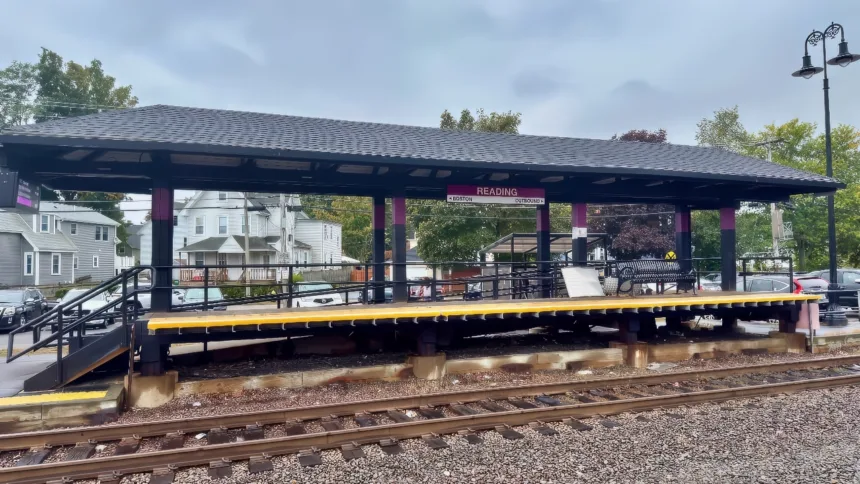
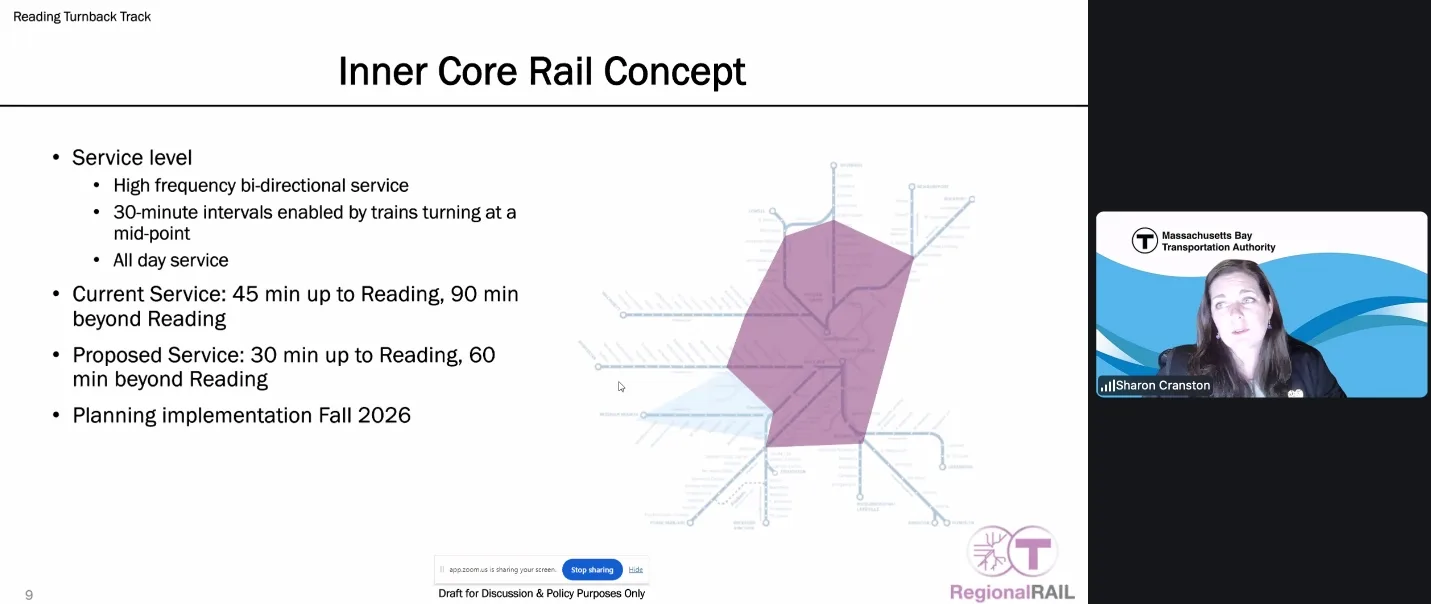
The proposed turnback track would allow inbound trains to reverse direction outside the station, freeing up the main line for through trains and enabling 30-minute service intervals between Reading and Boston. Currently, trains turn at Reading Station on a single track, causing delays and limiting service to every 45 minutes.
This project is essential to achieving clock-face scheduling,” said Sharon Cranston, MBTA’s Director of Rail Modernization Delivery. “It means trains will arrive at predictable times—on the hour and half-hour—throughout the day.”
📍 Site Selection and Community Alternatives
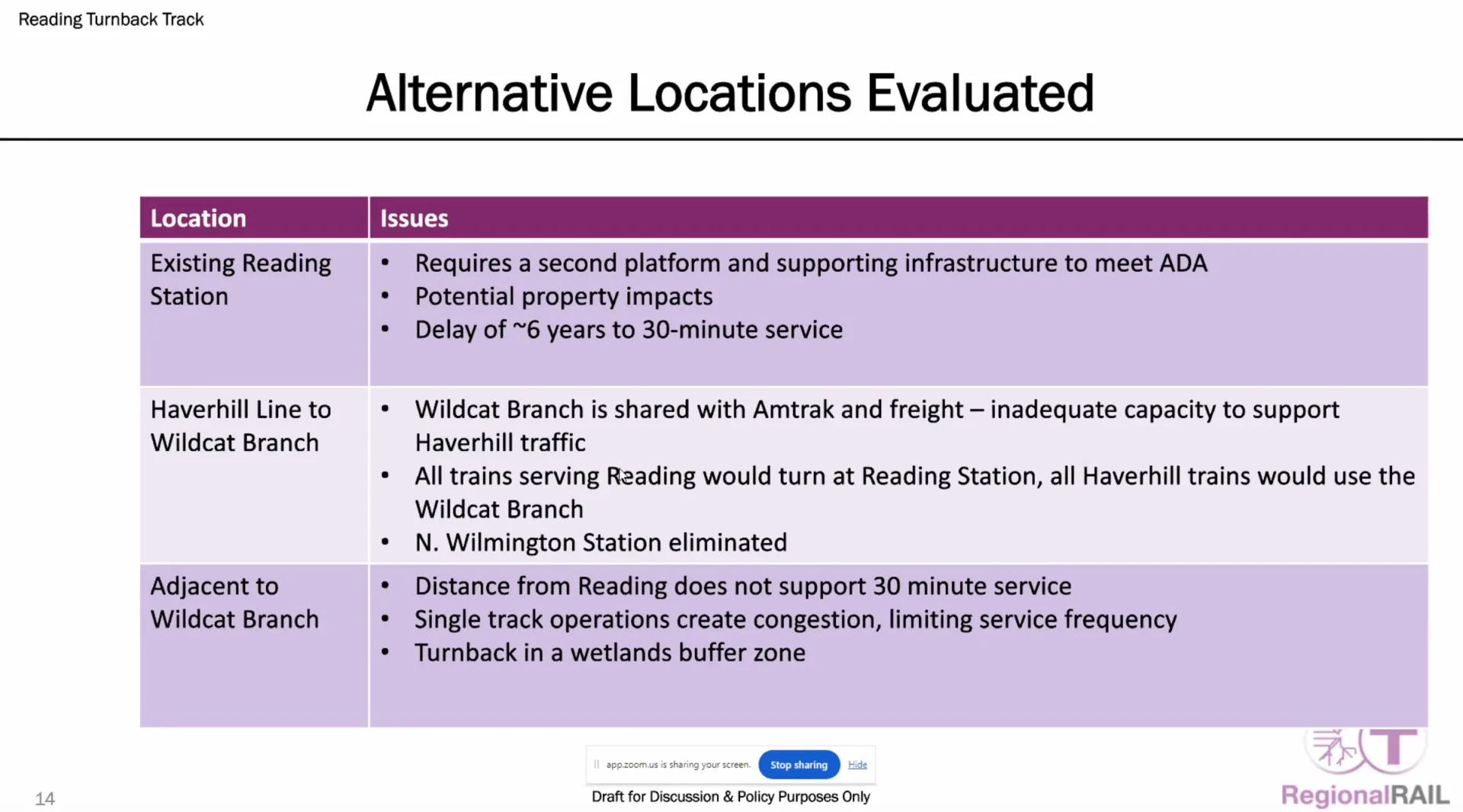
The MBTA reviewed six alternative locations suggested by residents, including sites near I-93, the Wildcat Branch, and even relocating the station. All were deemed unfeasible due to environmental concerns, ADA compliance requirements, or operational inefficiencies.
The preferred site is located on MBTA-owned land within conservation space north of Reading Station, using a historic second track bed. Officials emphasized that the location is farther from sensitive community features like schools and housing than the current station.
📊 Environmental and Technical Studies
To address community concerns, the MBTA conducted several studies:
- Noise Analysis: A train was idled for 20 minutes at the proposed site. The resulting sound increase ranged from 1–6 decibels—within acceptable limits and not disruptive to conversation.
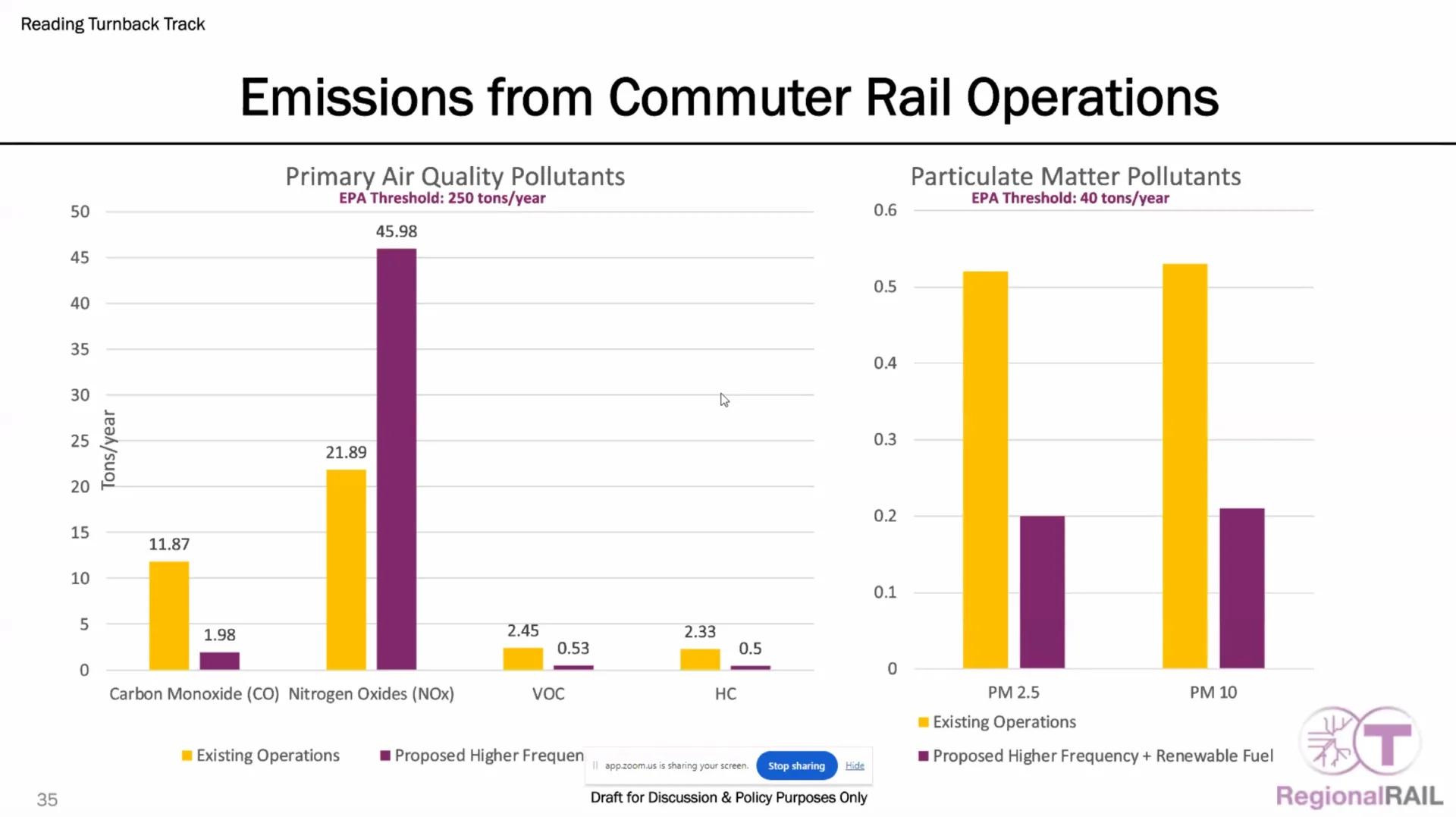
- Air Quality: The agency is transitioning to renewable diesel, which significantly reduces particulate emissions. Nitrogen oxide emissions will increase slightly but remain well below EPA thresholds.
- Gate Closures: While train frequency will increase, gate down times at crossings like Washington Street and Main Street are expected to decrease due to optimized signaling and train speeds.
🧑🤝🧑 Community Response: A Town Divided Over Transit Expansion
The MBTA’s proposal drew a wide range of reactions from residents, local officials, and transit users. The meeting revealed a deep divide between those who support expanded rail service and those who fear its impact on the town’s environment, quality of life, and infrastructure.
📣 Concerns About Noise, Pollution, and Transparency
Residents living near the proposed site expressed frustration over the potential increase in diesel train idling, which could occur up to seven hours per day. Concerns centered on noise pollution, air quality, and the impact on conservation land. Some questioned the validity of the MBTA’s noise study, which involved only two days of data collection and a single 20-minute idling simulation.
I’ve lived here for 51 years,” said one resident. “I like hearing the train, but I’m not going to like hearing it continuously.”
Others criticized the MBTA’s lack of commitment to electrification timelines, with some fearing that diesel operations could continue for decades. The agency responded that electrification is planned for the 2030s, but funding and infrastructure upgrades remain uncertain.
🏛️ ADA Compliance and Station Upgrades
Local officials, including Select Board Co-Chair Chris Haley, pressed the MBTA on ADA compliance at Reading Station. The MBTA acknowledged that the station is not fully compliant and that any new infrastructure would trigger costly upgrades. However, they emphasized that current funding is tied to track work—not station improvements—and that future upgrades would require separate legislative support.
🚗 Traffic and Gate Closures
Residents also raised concerns about increased gate closures at key crossings like Washington Street and Main Street. MBTA officials assured the public that while closures would be more frequent, each would be shorter due to improved signaling and train speeds. Still, some questioned why these optimizations couldn’t be implemented immediately.
🚉 Support for Expanded Service
Despite the concerns, several residents voiced strong support for the project, citing the need for reliable, frequent service—especially for those without cars or working non-traditional hours.
I used to drive to Boston because the train schedule didn’t work for me,” said one commuter. “If there were trains every 30 minutes, I’d take it.”
Others pointed to the 1,700 new housing units coming online near the station, arguing that increased service is essential to accommodate future demand and reduce car traffic. To clarify, the recently passed MBTA Act permits up to 1,526 potential units by right, including areas beyond the train depot, such as Summit Drive and Archstone Circle. Currently, none exist.
🤝 Calls for Compromise and Accountability
Some residents proposed compromise solutions, such as focusing service during peak hours or exploring alternative transit options like shuttle buses to Anderson/Woburn. Others called for a continuous quality improvement plan, asking the MBTA to monitor ridership and adjust service levels accordingly.
MBTA officials emphasized that the turnback track is a flexible infrastructure investment, not a fixed service mandate. They committed to biannual schedule reviews and welcomed ongoing community feedback.
📅 Timeline and Future Plans
Pending approval from the Reading Conservation Commission, construction is expected to begin in Spring 2026, with the new service schedule launching in Fall 2026.
The MBTA also confirmed long-term plans to electrify the line, with battery-electric trains expected in the 2030s, pending funding and infrastructure upgrades.
For more information or to submit feedback, residents can contact the MBTA at MBTA.com or email the Railroad Operations team at MBTA_RR@mbta.com.