Depot Cam
 Override 2026
 Shop 01867
 AI Recaps
 LTE’s
LTE’s Police and Fire Scanner
 Search & Ask Recap AI
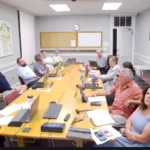
Below is a summarized version of the Select Board meeting, organized by timestamps and speakers, focusing on key points raised during the discussion in Reading, Massachusetts. This summary condenses the discussion into major themes, speaker contributions, and decisions, avoiding excessive detail while retaining the essence of the conversation. Timestamps correspond to the video linked at the bottom.
📅 July 28, 2026 Select Board Meeting
🕒 Meeting Start: 00:01:47
⏰ Meeting End: 01:07:03
💻 Format: Remote
👤 Chair: Melissa Murphy
👥 Attendees: Melissa Murphy, Karen Rose-Gillis, Karen Gately Herrick, Sal Bramante, Christopher Haley, Jayne Wellman, Sharon Angstrom, Madeleine Baptiste, Edward Ross, Shawn Brandt, Thomas Wise, Erin Gaffen, Marianne McLaughlin-Downing
📋 Summary
The Select Board convened to determine whether to place a Proposition 2½ override question on the November 2026 state election ballot. Town Manager Jayne Wellman reviewed the town’s projected FY28 structural deficit, estimated at $6.5 million and growing to approximately $9.8 million in future years, and outlined override options previously discussed with the Finance Committee and School Committee.
Board members discussed whether to present one or multiple override options to voters, the role of free cash in balancing future budgets, and the possibility of phasing in any approved override. After hearing comments from Finance Committee and School Committee representatives, the Select Board voted 4–1 to place a $6.5 million override request on the November 2026 ballot. No additional override amount was advanced.
📑 Agenda Overview
| ⏰ Start Time | Topic |
|---|---|
| 00:01:47 | Call to Order, Roll Call, Pledge of Allegiance |
| 00:04:06 | Public Comment Opportunity |
| 00:04:45 | FY28 Override Overview and Budget Presentation |
| 00:13:40 | Select Board Discussion on Override Options |
| 00:30:30 | Discussion of Phased Override Implementation |
| 00:50:24 | Input from School Committee and Finance Committee Members |
| 01:05:24 | Vote on Override Request |
| 01:06:15 | Adjournment |
🏢 Administrator / Manager Report
⏰ 00:04:45 – 00:13:40
👤 Presenter(s): Jayne Wellman
🏗 State / Regional Policy
Jayne Wellman summarized the town’s FY28 budget planning process and explained the structural deficit facing Reading. Staff, department heads, and financial officials had been evaluating options since April 2026.
Key points included:
- FY28 projected structural deficit of approximately $6.5 million, increasing to roughly $9.8 million in future years.
- A $6.5 million override would require approximately $3.0–$3.3 million in free cash to balance the budget.
- A higher-tier option previously discussed would address the full deficit without relying on free cash.
- Proposal to adopt a more restrictive free cash policy tied to annual capital spending levels.
- FY28 budget reflects level services rather than expanded programming.
- Failure of an override would result in service reductions across departments and the equivalent of approximately 67 position reductions across town and school operations.
🗳 Discussion & Vote – FY28 Override Ballot Question
⏰ 00:13:40 – 01:05:24
👤 Presenter(s): Melissa Murphy, Karen Rose-Gillis, Karen Gately Herrick, Sal Bramante, Christopher Haley, Jayne Wellman, Sharon Angstrom
Overview:
The Select Board discussed whether to place one or more override questions before voters and whether any approved override should be phased in over multiple years.
Key Discussion Points:
- Melissa Murphy, Sal Bramante, and Karen Gately Herrick expressed support for a single $6.5 million override question.
- Karen Rose-Gillis favored presenting two options, including a higher amount consistent with Finance Committee recommendations.
- Christopher Haley advocated for consideration of $5 million and $6.5 million options but indicated openness to a single $6.5 million proposal with reducing free cash expenditures.
- Board members generally supported exploring phased implementation to lessen immediate taxpayer impacts.
- Discussion focused on balancing fiscal sustainability with affordability concerns following recent debt exclusion projects, including the Killam and Reading Center for Active Living projects.
- Jayne Wellman and Sharon Angstrom explained potential phase-in scenarios and how free cash could be managed under a phased approach.
- Members discussed the importance of reducing reliance on free cash and improving public communication regarding tax impacts.
Additional Input from Other Boards and Committees
⏰ 00:50:24 – 01:05:24
👤 Presenter(s): Shawn Brandt, Erin Gaffen, Edward Ross, Thomas Wise, Marianne McLaughlin-Downing
- School Committee representatives expressed concern that a $6.5 million override would not fully address the structural deficit and could require future budget reductions.
- Finance Committee representatives encouraged providing voters with multiple override options and emphasized voter education regarding long-term financial impacts.
- Speakers argued that voters should have the opportunity to consider both minimum and full-deficit funding approaches.
Vote:
✅ Approved
Vote Count: 4–1
Roll Call:
- Melissa Murphy — Yes
- Karen Gately Herrick — Yes
- Sal Bramante — Yes
- Christopher Haley — Yes
- Karen Rose-Gillis — No
Motion:
- Place a $6.5 million override request on the November 2026 state election ballot.
🔑 Key Summary
- The Select Board reviewed Reading’s projected FY28 structural deficit and override options.
- Town staff recommended a $6.5 million override coupled with limited use of free cash.
- Board members discussed presenting one versus multiple override questions to voters.
- Significant discussion focused on reducing reliance on free cash and adopting stronger fiscal discipline.
- Staff presented examples of phasing in override impacts over multiple years.
- School Committee and Finance Committee representatives urged consideration of higher funding options and voter choice.
- The Select Board voted 4–1 to place a $6.5 million override request on the November 2026 ballot.
- Future discussion is expected regarding phased implementation and public communication of tax impacts.