Depot Cam
 Override 2026
 Shop 01867
 AI Recaps
 LTE’s
LTE’s Police and Fire Scanner
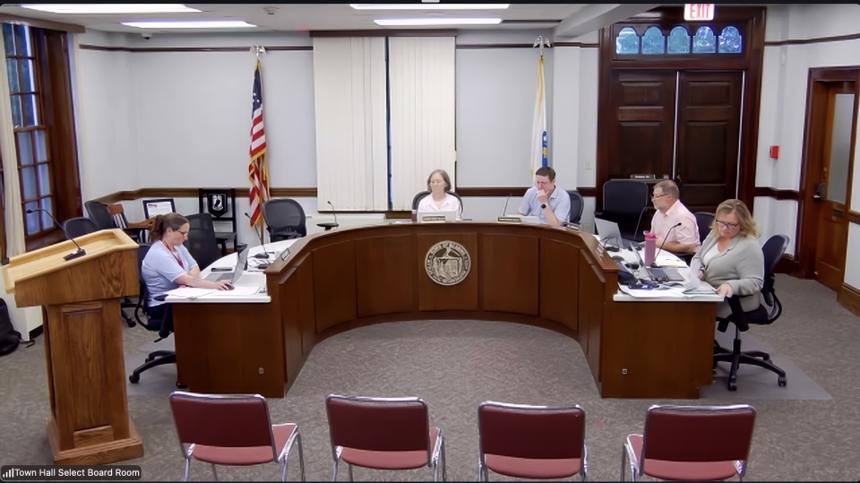
"Board members weigh whether to present voters with one override amount or multiple choices as financial officials warn of significant budget shortfalls."
The Select Board spent more than three hours Wednesday discussing a potential Proposition 2½ override, weighing how much additional revenue to seek from voters and what approach would give a ballot question the best chance of success.
The discussion followed a recommendation from the Finance Committee that voters be presented with two override options: $7 million and $9.8 million. Finance Committee Chair Marianne Downing said the committee favored giving residents a choice between a lower-cost option and a figure designed to fully address the town's projected structural deficit.
Town Manager Jayne Wellman outlined the financial challenges facing the town, noting that Reading's structural deficit is projected to grow from approximately $6.5 million this fiscal year to $9.8 million in FY28 and $11.4 million by FY32. She warned that without an override, the town would face significant staffing reductions and service cuts across municipal and school departments.
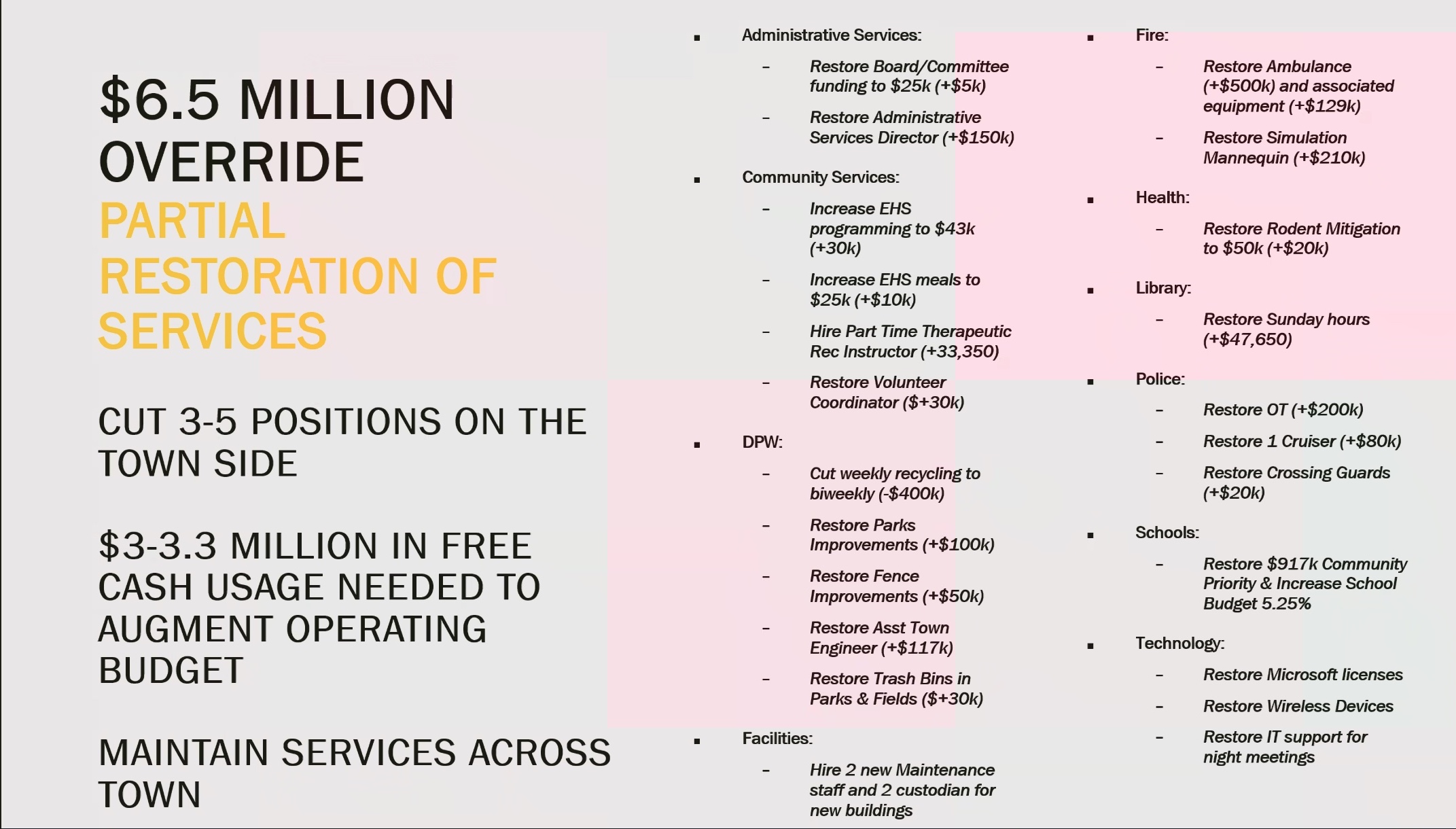
Wellman presented several scenarios for consideration. Her recommended approach, a $6.5 million override supplemented by approximately $3 million in free cash, would preserve most services but still require some workforce reductions and continued reliance on one-time revenues. A $7 million override would preserve weekly recycling service, while a $9.8 million override would fully close the projected FY28 structural deficit, avoid personnel reductions, and eliminate the need to use free cash to support operating expenses in the first year.
While board members generally agreed that Reading's financial trajectory requires action, they differed on how to present that choice to voters.
Some members expressed support for a tiered approach that would allow residents to choose between multiple override amounts. They argued that voters may be more receptive if they can weigh different funding levels and corresponding service impacts rather than being limited to a single proposal. Supporters also pointed to neighboring communities that have successfully used tiered override questions.
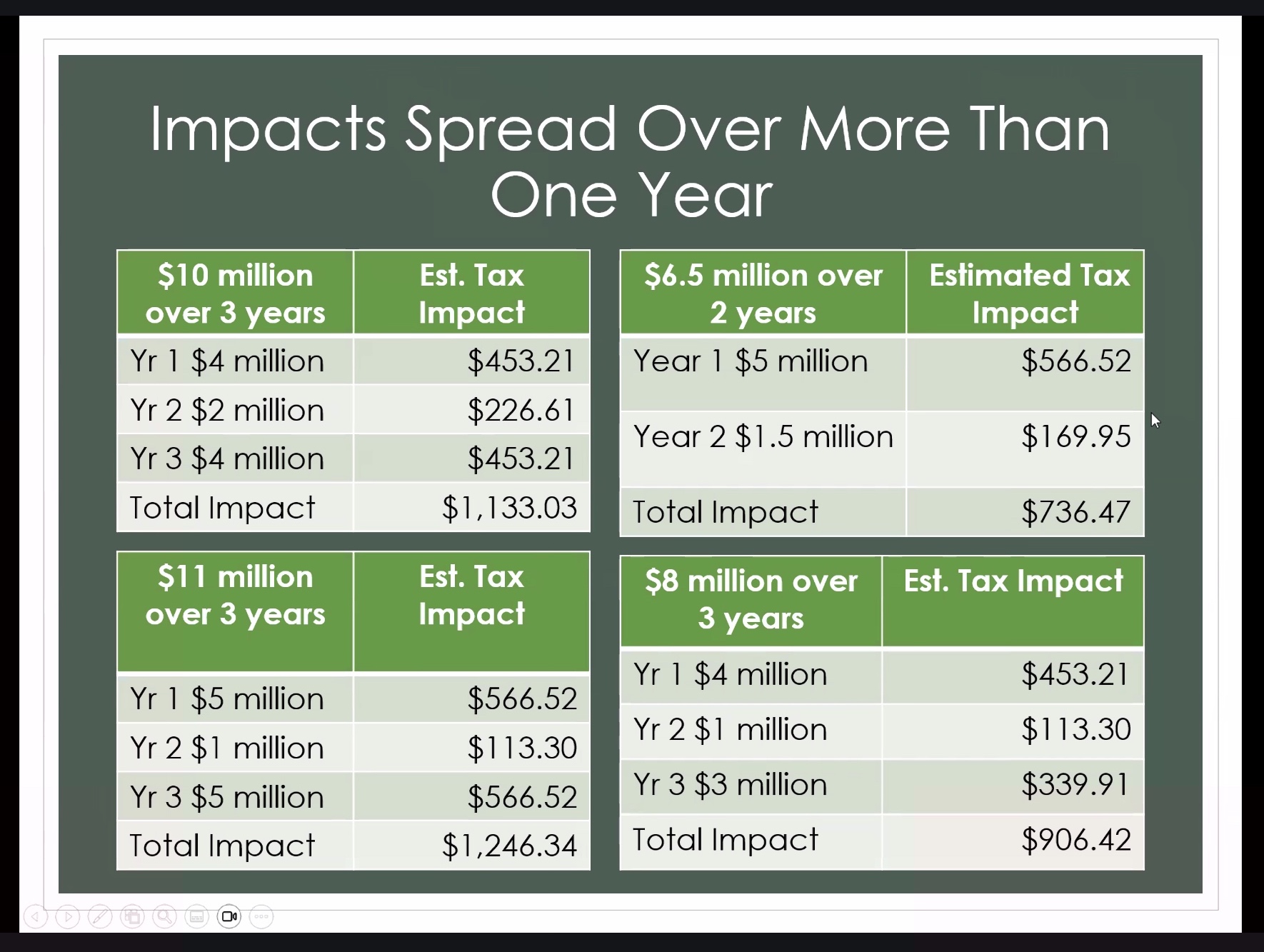
Others questioned whether multiple ballot questions could create confusion or divide voter support. Those members favored selecting a single amount and building a clear, unified message around it, arguing that one proposal would be easier for residents to understand and evaluate. Several also expressed concern about asking taxpayers for too much at a time when residents are already absorbing the costs of the recently approved debt exclusions for the new ReCal and Killam Elementary School projects.
Select Board member Chris Haley captured the tension facing the board, saying he felt officials were being forced into an impossible choice between affordability and preserving services.
Choices are usually good. But me sitting up here, I feel like I do not have a choice,” Haley said. “Who do I want to alienate out of this town? The seniors that are going to get pushed out because they can't afford it, or the schools?”Haley described the override debate as a difficult balancing act between protecting taxpayers and maintaining the level of municipal and educational services residents expect.
A recurring theme throughout the evening was whether the board had enough information from the School Department before making a final decision. Several members questioned whether the Select Board should vote before hearing the School Committee's discussion of potential school impacts and funding priorities.
Member Karen Herrick was among those who favored waiting for additional information before taking action. She noted that the board had not yet seen the details Superintendent Henry Turner planned to present to the School Committee the following night regarding potential reductions and priorities. Herrick said she was concerned about voting before that information was available and warned against making a decision based on what she described as an "undefined placeholder."
Her concerns helped shape the board's eventual decision to postpone a vote. While some members felt they already had sufficient information to move forward, others argued that hearing the superintendent's presentation and the School Committee's recommendations would provide important context about the real-world impacts of various funding scenarios.
The School Committee was scheduled to meet the following evening to discuss override scenarios and vote on its own recommendations. By the end of the discussion, the Select Board agreed to delay a final decision and reconvene July 28, allowing members time to review the School Committee's deliberations, gather additional information, and better understand the potential consequences of different override options before determining what proposal, if any, will be placed before voters.
Under Reading's Town Charter, the override recommendation originates with Town Manager Jayne Wellman, while the decision on whether to place a question before voters ultimately rests with the Select Board. With an August 5 deadline to submit ballot language to the state, board members have limited time remaining to reach a consensus on the town's path forward.