âWorkshop prompts discussion about capital priorities, reserves, and longâterm planningâ
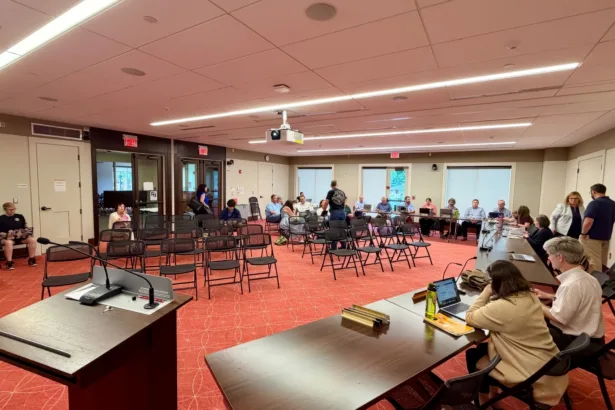
Town financial leaders and Finance Committee (Fincom) representatives offered an extended debrief last Wednesday night following Readingâs hosting of a regional Division of Local Services (DLS) financialâpolicies workshop at the Reading Public Library. The fourâhour session drew municipal officials from across the region and provided a deep dive into best practices for budgeting, capital planning, and internal financial controls.
Town Accountant Sharon Angstrom and Town Manager Matt Kraunelis said the workshop validated many of Readingâs longstanding financial practices while also identifying opportunities to update, clarify, and consolidate policies.
Kraunelis told the committee he considered the event âa really great⌠seminar workshop,â noting that DLS previously wrote policies for communities directly, but now focuses on educating local officials so towns can revise and adopt policies themselves. He said the DLS templates would help Reading ârefreshâ existing policies and identify ânew policyâ areas to strengthen.

Angstrom said she found the templates useful because they clearly referenced applicable state laws, allowing Reading to ensure its policies âmatch up with current law.â She plans to review each of Readingâs existing financial policies and bring forward updated drafts for discussion.
Committee Members Praise Staff, Seek Greater Clarity in Capital Priorities
Several FINCOM members praised Angstromâs work, with Joseph McDonagh noting, âWe are fortunate to have her,â after hearing how other communities struggled with issues Reading routinely manages well. Members said the workshop underscored the importance of clearly documented policiesâboth for consistency and for onboarding new officials.
A recurring theme from Fincom was the desire for more transparent prioritization within the capital plan. Members said they often see lineâitem shuffling at Town Meeting but lack a clear view of the underlying rationale.
I donât have a good sense of why the dump truck got moved up this year,â said committee member Geoff Coram.
Angstrom explained that capital scheduling is driven by usefulâlife assessments and conversations with department staff, combined with Readingâs longstanding policy to dedicate 5% of the operating budget to capital and debt. She emphasized that this approach, unique among many towns, ensures Reading does not defer major capital needs.
Free Cash, Conservatism, and LongâTerm Budget Pressure
The workshop also reignited discussion about how Reading uses free cash, especially as the town faces rising costs and a likely operational override request.
Some DLS presenters suggested communities should avoid relying on free cash for recurring capital spending, but Angstrom said this general guidance doesnât fully align with Readingâs model. She emphasized that Reading uses free cash only to support part of its alreadyâguaranteed 5% capital commitmentârather than using free cash in place of capital planning, as some towns do.
She pushed back against the suggestion that Reading is overly conservative, saying:
Iâm pushing those numbers up as high as I can and still weâre falling short,â particularly after years of high inflation on fixed costs such as trash collection and health insurance. Overly optimistic revenue projections, she stressed, would put the town at risk: âI donât want to go to Town Meeting and say I overâprojected my revenues.â
Committee members agreed the public often misunderstands free cash, with one noting that large balances are ânot a sign of recklessness,â but rather the product of a disciplined capitalâfunding structure.
Next Steps
Angstrom will conduct a detailed review of all financial policies, comparing Readingâs documents to the DLS templates. Both she and Kraunelis anticipate future joint discussions between the Select Board and Fincom, though Angstrom said she still needs clarity on which policies each board must formally approve.
Committee Chair Joe Carnahan said the debrief was a valuable step and encouraged staff to bring forward drafts as they are ready. With a challenging budget season underway and an override discussion expected later this year, several members noted that clearer policies could help the town communicate its financial approach more effectively to residents.