


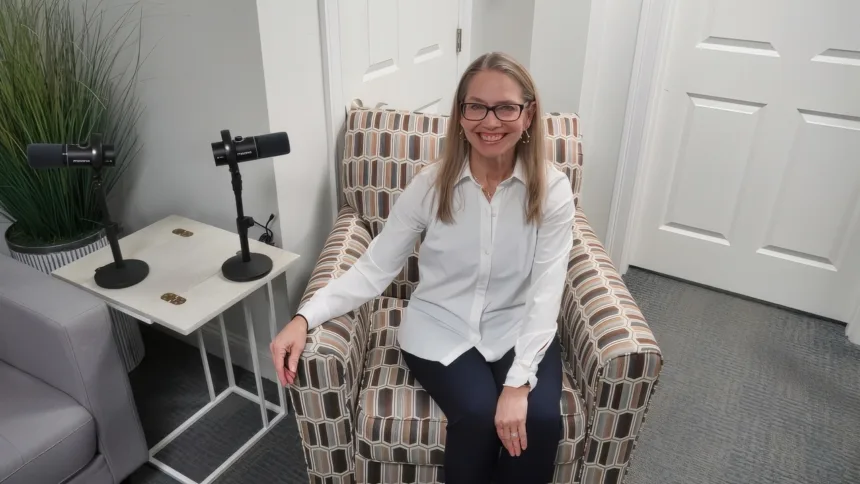
“Candidate calls for clearer metrics, thoughtful budgeting, and community engagement“
- Background and Motivation
- Focus on Literacy Instruction
- Classroom Resources and Volunteer Engagement
- Class Size and Staffing Decisions
- Budget Pressures and Position Evaluation
- Technology Use and Screen Time
- Artificial Intelligence Policy
- Unified Sports and Article 14
- Vision for District Communication
- Closing Message
School Committee candidate Lori Lynn Hayes highlighted literacy instruction, student leadership, and clearer communication with families during a recent candidate forum hosted by Reading Recap, as she seeks election in the April 7th municipal vote.
Hayes was one of three candidates to participate in the March 27th School Committee forum, which explored district finances, curriculum initiatives, staffing, technology use, and future leadership priorities for Reading Public Schools.
Background and Motivation
In her opening remarks, Hayes described herself as a highly engaged parent and community volunteer who decided to run for School Committee following the announcement that the current superintendent would be leaving the district.
She said her candidacy is driven by a desire to help preserve the community culture of Reading Public Schools during a period of leadership transition, while continuing to address persistent academic and operational challenges.
Hayes characterized herself as a “doer,” pointing to a history of identifying needs and stepping in to help address them through volunteerism and advocacy.
Focus on Literacy Instruction
Literacy emerged as a central theme throughout Hayes’ remarks. She said approximately 40% of students experience difficulty learning to read and argued that addressing those needs requires sustained focus and data‑driven follow‑through.
Hayes described her involvement with the district’s literacy efforts, including support for the adoption and expansion of the ARC Core curriculum beginning in kindergarten and extending through middle school. She said she would want to ensure that literacy initiatives are continuously evaluated for effectiveness and adjusted to meet the needs of students who struggle the most.
She also emphasized attention to students in the middle range of achievement, saying those learners often receive less targeted support despite substantial needs.
Classroom Resources and Volunteer Engagement
Hayes cited several specific examples of hands‑on involvement in the schools. She described helping refresh classroom and school library collections by working with teachers and librarians to provide hundreds of curated books for students.
She also referenced volunteering in a wide range of roles, including classroom support, event organization, and extracurricular activities, saying those experiences give her insight into both instructional and community aspects of the school system.
Class Size and Staffing Decisions
On questions of class size, Hayes said the district must remain mindful of equity across schools, particularly as it faces financial pressure from a potential Proposition 2½ override.
She suggested that when enrollment allows, targeted use of school choice and flexible staffing models may help avoid large disparities without over‑allocating resources. Hayes said any staffing decisions should prioritize legal requirements and core instructional needs while remaining sensitive to budget constraints.
Budget Pressures and Position Evaluation
When asked how the district should respond if revenues tighten, Hayes said the first step should be examining unfilled positions and vacancies created through attrition.
She noted that positions required by law or tied to student safety should remain protected, while non‑core roles may warrant review. Hayes emphasized that difficult decisions must be guided by transparency and a clear understanding of educational priorities.
Technology Use and Screen Time
Hayes expressed concern about increasing reliance on screens in classrooms, particularly at younger grade levels. While acknowledging the need for computers for testing and modern curriculum, she said excessive screen use can limit student interaction, movement, and well‑being.
She suggested that reducing device dependence where possible could benefit students while also potentially lowering long‑term equipment replacement costs.
Artificial Intelligence Policy
Hayes said she supports developing a formal policy on artificial intelligence for Reading Public Schools and noted that a district working group is already examining the issue.
She emphasized that AI is evolving rapidly and suggested the creation of a standing advisory group to help the School Committee stay ahead of emerging risks and opportunities. Hayes also voiced concern about harmful AI applications, including chatbots and content that could negatively affect students.
She said the district should emphasize that AI is a tool to assist learning—not replace human judgment—and that responsible use should be explicitly taught.
Unified Sports and Article 14
On the funding of Unified Sports, Hayes said there is broad agreement across the community that the program should be fully supported. She described the key debate as one of funding mechanics rather than program value.
Hayes expressed openness to funding models involving Burbank Ice Arena but said she wants to hear additional discussion at Town Meeting before taking a firm position. She indicated that Unified Sports funding may need to increase over time as the program continues to expand.
Vision for District Communication
One of Hayes’ recurring themes was communication and transparency. She said the district’s strategic plan, while comprehensive, is difficult for families to digest in its current form.
Hayes proposed developing a public‑facing dashboard to track progress on strategic goals in a clear and accessible way. She suggested that this could potentially be developed as a student project, incorporating data analysis and technology skills.
She also floated the idea of exploring long‑term fundraising mechanisms, such as a nonprofit endowment, to support innovative programming beyond the constraints of annual operating budgets.
Closing Message
In her closing remarks, Hayes reiterated her belief that Reading Public Schools should focus not only on academic outcomes but also on leadership development, equity, and community engagement.
She said she hopes to bring curiosity, problem‑solving, and thoughtful questioning to the School Committee, and encouraged residents to vote in the April 7th election.
You can watch the full forum below. We’ll be highlighting each participant with individual articles over the course of the week.