

“Lease terms, finances, and oversight dominates Select Board meeting“
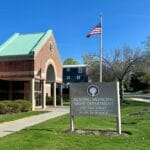
Tensions surrounding the Burbank Ice Arena were already elevated before the Select Board reached its formal agenda on March 10th, as arena board member Carl McFadden used public comment to accuse a Select Board member of allegedly contributing to a hostile environment for arena staff.
Speaking as a resident, McFadden said repeated public statements by a board member with oversight responsibility for the arena had consequences beyond the meeting room. Without naming the individual directly, his remarks closely mirrored concerns later raised during the meeting by Select Board member Karen Herrick, who serves as the board’s liaison to the Burbank Ice Arena.
I’ve gotten to the point where enough’s enough,” McFadden told the board. He said that when critical comments are made publicly without clarification, they spill over into daily operations and “it becomes a hostile work environment for our staff.”
Herrick, who has repeatedly emphasized fiscal oversight and long‑term risk to the town, later disputed McFadden’s characterization and said her comments were intended to protect taxpayers, not target staff.
That exchange set the tone for what later became a lengthy and emotionally charged debate over proposed changes to the Burbank Ice Arena lease and authorization of a master parking license agreement, exposing sharp divisions over finances, oversight, and trust.
Reserve Fund and Rent Payments at the Core
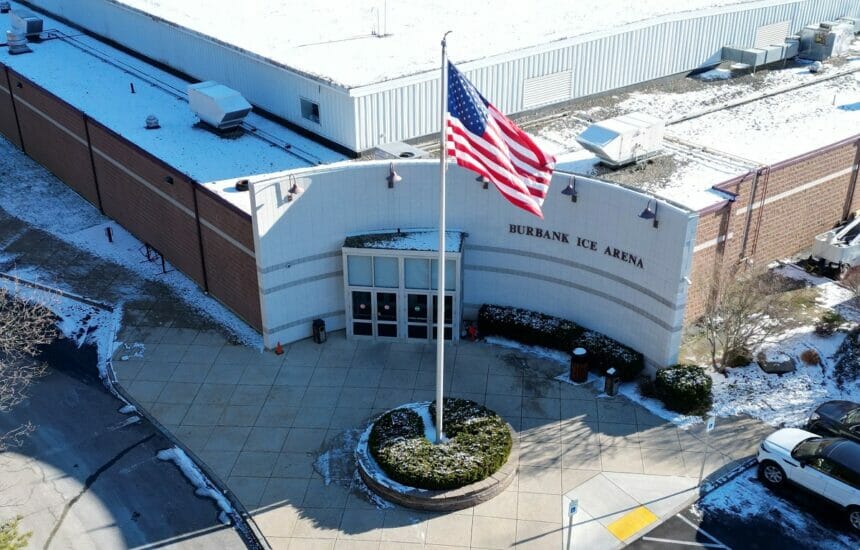
The formal discussion centered on a first amendment to the long‑standing lease governing the privately operated, nonprofit ice arena. Under the existing agreement, the arena is required to maintain a contingency reserve originally capped at $300,000 and indexed annually to inflation, a figure now estimated at approximately $417,000. An initial proposal would have replaced that formula with a flat $500,000 reserve, delaying rent payments to the town until the higher threshold was met.
Herrick expressed serious concern that the change would further postpone rent revenue at a time when the town faces significant budget pressures.
I have a grave concern that we are not getting rent payments out of this agreement,” Herrick said, noting that the town has not received rent in recent years.
She questioned whether raising the reserve requirement would make it realistic for the town to ever see meaningful lease revenue, even as the arena continues to operate successfully.
McFadden responded that the absence of rent payments was not the result of avoidance or mismanagement, but of necessary capital investments, including a roughly $250,000 roof replacement, that required rebuilding the reserve fund.
Of course not,” McFadden said when challenged on the lack of rent. “We spent a quarter of a million dollars fixing our roof. Everyone knew that.”
To provide some additional financial context, the Burbank Ice Arena has returned nearly $2.6 million to the town over its 30-year history and is currently debt-free. These figures do not include approximately $1 million in capital improvements, such as the girls’ locker room renovation and the purchase of an electric Zamboni.
Conflict of Interest Concern Raised
During the debate, Herrick raised a cautionary note about the lease language itself, warning that tying rent proceeds so explicitly to adaptive and unified sports programs could create the appearance of a future conflict of interest. She referenced McFadden’s background running youth sports programs through his private business, SNL Sports, and said that while she was not alleging wrongdoing, future boards could find the arrangement problematic if roles overlapped.
McFadden responded sharply, rejecting the implication and stating that SNL Sports does not operate adaptive sports programs in Reading. He said his advocacy was rooted in the original intent of the Burbank family and accused Herrick of repeatedly framing concerns in ways that suggested impropriety where none existed. McFadden said he believed such comments had contributed to public misunderstanding and increased scrutiny of arena staff.
Escalating Tensions and Direct Confrontation
As the discussion continued, the tone became increasingly pointed. McFadden accused Herrick of misrepresenting the arena’s finances and amplifying criticism that, in his view, directly affected employees.
To act like we’re being nefarious because we haven’t paid rent in two years, of course we haven’t,” he said. “That’s what the reserve fund is for.”
He also directly challenged Herrick’s role as the Select Board’s liaison to the arena.
If you have grave concerns, you’ve been our liaison for over four years and you’ve never attended one meeting,” McFadden said.
Herrick immediately disputed that characterization.
That’s not accurate,” she responded. “I have asked to be invited to your meetings, and I do ask for meeting minutes regularly.”
She added that she was the one who initially alerted arena leadership to roof problems, which ultimately led to the repairs McFadden cited, and said she was glad when the project was completed successfully under budget.
Votes Taken After Lengthy Debate
After more than two hours of discussion, the Select Board moved forward with a series of votes that reshaped the lease terms while preserving the overall agreement.
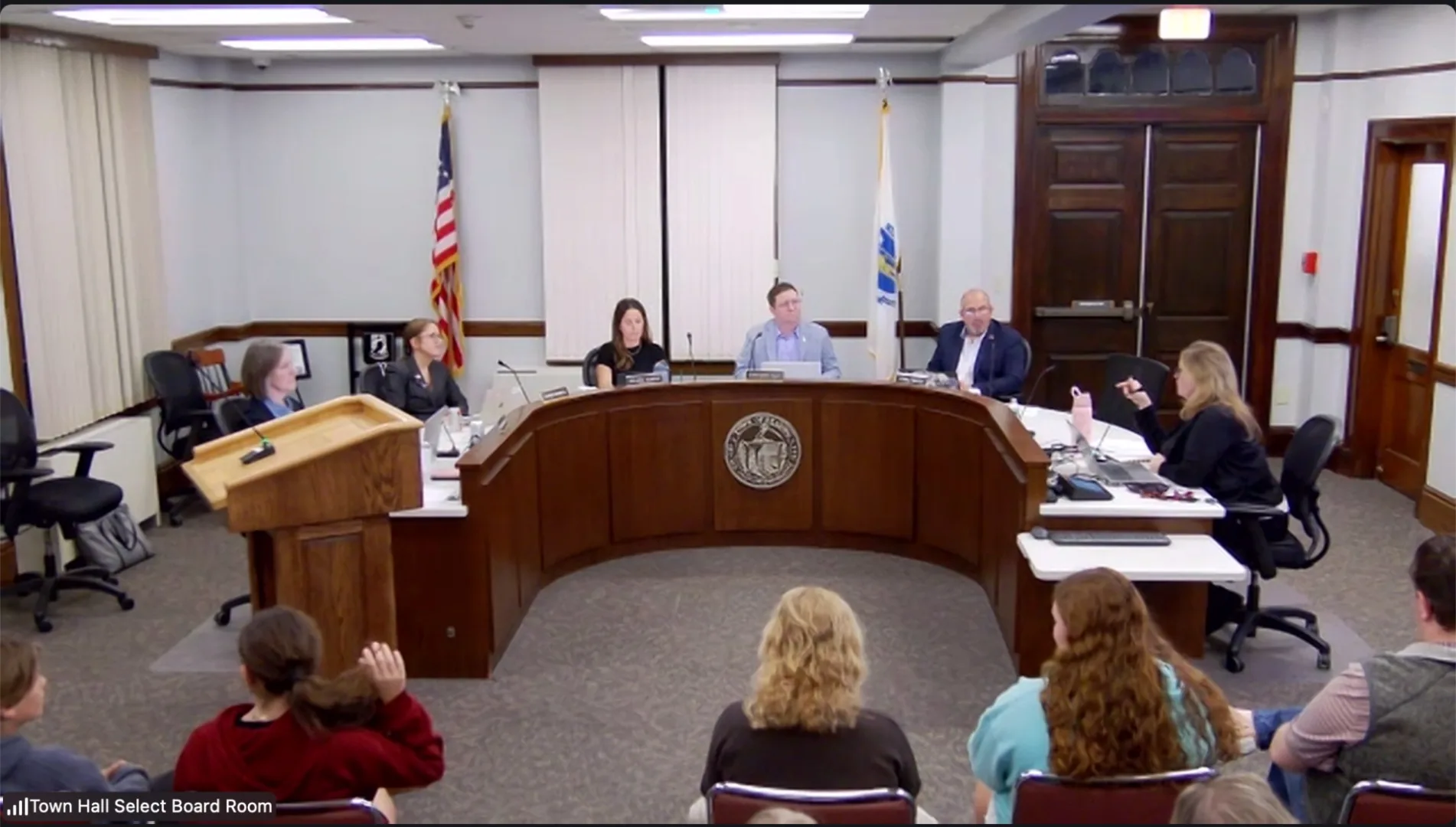
The board voted 3-2 to increase the maximum portion of future rent that may be directed to stabilization funds to 100 percent, allowing flexibility to support adaptive and unified sports programs. Herrick and Rose-Gillis were the two dissenting votes.
In a separate unanimous vote, the board approved 5-0 a change to reduce the contingency reserve requirement to $415,000, reflecting the current CPI‑adjusted level rather than a flat $500,000 threshold.
With those changes in place, the board then voted 5-0 to approve the First Amendment to the Burbank Ice Arena lease, and 5-0 to authorize the master parking license agreement.
Parking Agreement Moves Forward
The parking license agreement grants the town non exclusive use of 28 parking spaces behind the ice arena for pickleball courts associated with the Center for Active Living, while allowing the arena to manage access for security and major events. Town staff emphasized that structuring the arrangement as a license, rather than a lease, avoids triggering Town Meeting approval under state law.
Herrick said she supported the parking agreement and did not want it delayed by disagreements over lease language.
Broader Policy Questions Remain
Although the votes resolved the immediate lease and parking issues, broader policy questions lingered. Board members expressed general support for directing arena revenue toward adaptive and unified sports, but disagreement remained over how much financial flexibility the town should retain for its general fund.
Despite her reservations, Herrick indicated she would not stand in the way of moving forward if the majority supported the agreement, underscoring the uneasy balance between cooperation and conflict that defined a meeting where tensions were evident well before the first vote was taken.