


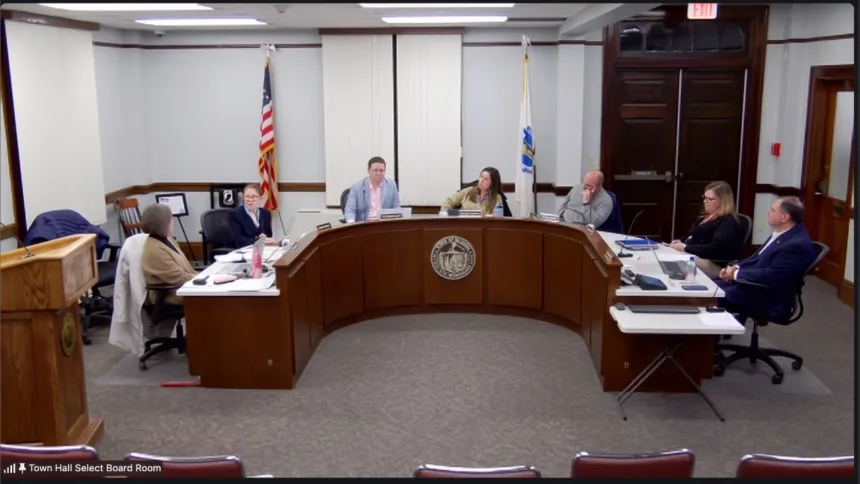
“𝘽𝙤𝙖𝙧𝙙 𝙎𝙚𝙚𝙠𝙨 𝘾𝙡𝙖𝙧𝙞𝙩𝙮 𝘼𝙛𝙩𝙚𝙧 𝘿𝙞𝙨𝙥𝙪𝙩𝙚𝙙 𝙈𝙈𝘼 𝙑𝙤𝙩𝙚 𝙍𝙖𝙞𝙨𝙚𝙨 𝙋𝙧𝙤𝙘𝙚𝙙𝙪𝙧𝙖𝙡 𝙌𝙪𝙚𝙨𝙩𝙞𝙤𝙣𝙨“
The Reading Select Board voted to send a formal letter to the Massachusetts Municipal Association (MMA) stating that Select Board member Karen Gately-Herrick cast a vote at the MMA’s Jan. 24th business meeting without written authorization from the Board’s chair, contrary to MMA bylaws and policy. The Board documented this in writing to clarify the town’s position.
At issue was Gately-Herrick’s vote on a non-binding MMA resolution urging a “strengthened fiscal partnership between municipalities and the state for FY2027 and beyond.” Chair Chris Haley had not provided written delegation of voting authority (as outlined in related email communications). Gately-Herrick proceeded after MMA staff allowed her to vote in person. The Board’s discussion focused on clarifying the procedural requirements and noting that Reading’s vote should not have been cast on behalf of the town. The amended letter—focused strictly on the procedural matter—passed unanimously, 5-0.
Gately-Herrick’s Defense
Gately-Herrick explained that she has attended MMA conferences for years, serves on the association’s Fiscal Policy Committee, and had asked the chair in advance to designate her as Reading’s delegate. She noted that the resolution had been vetted by MMA committees and other board members.
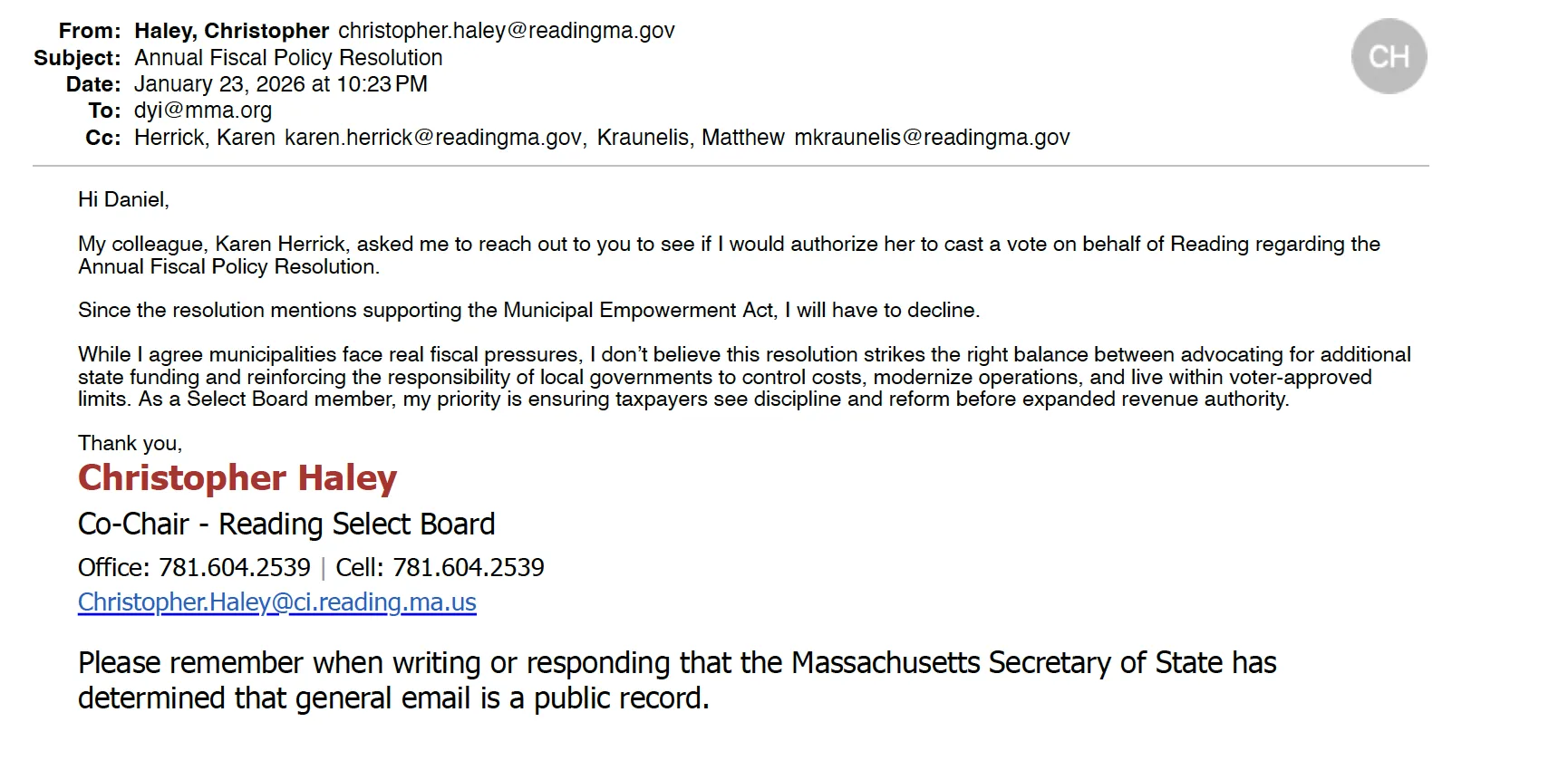
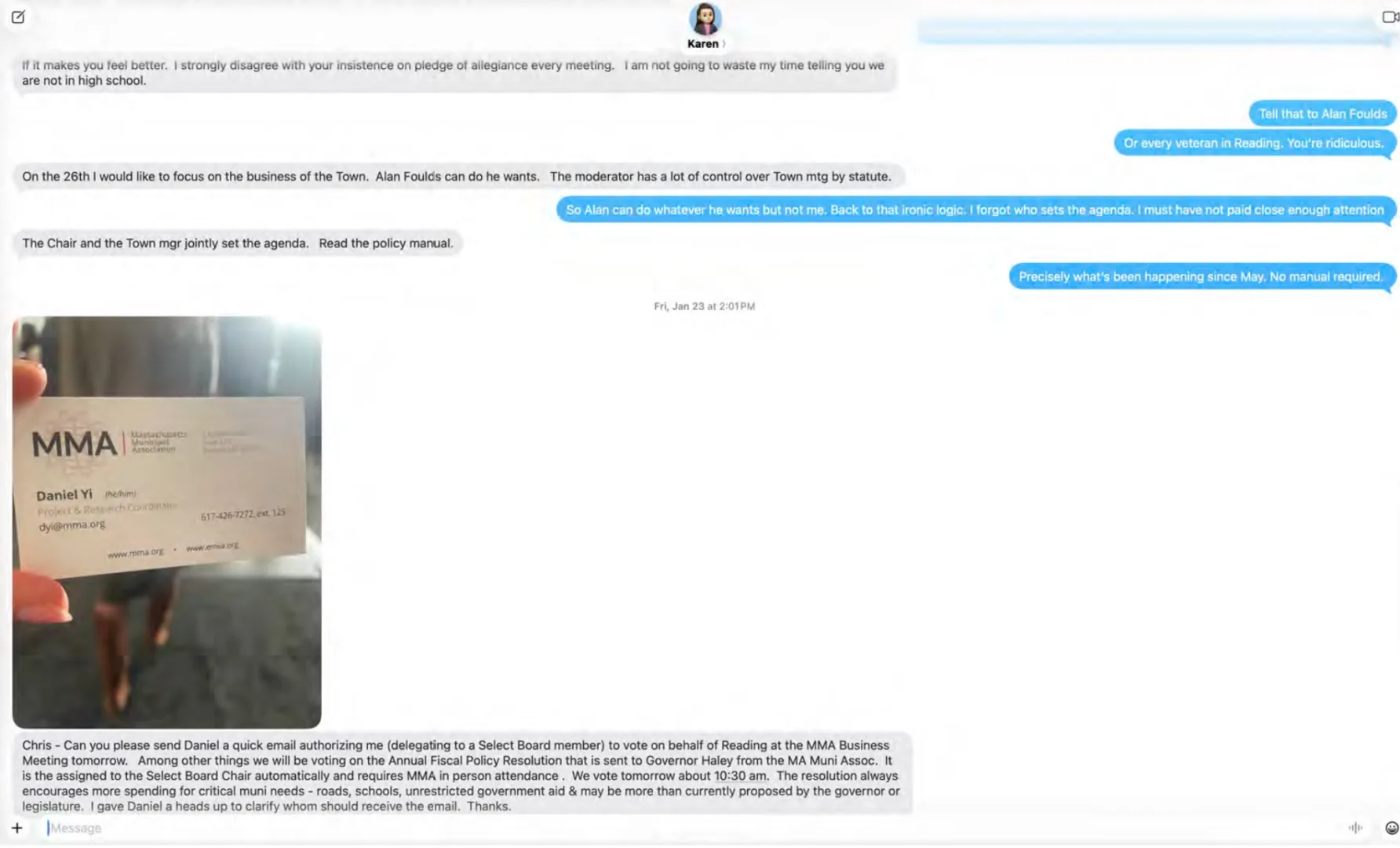
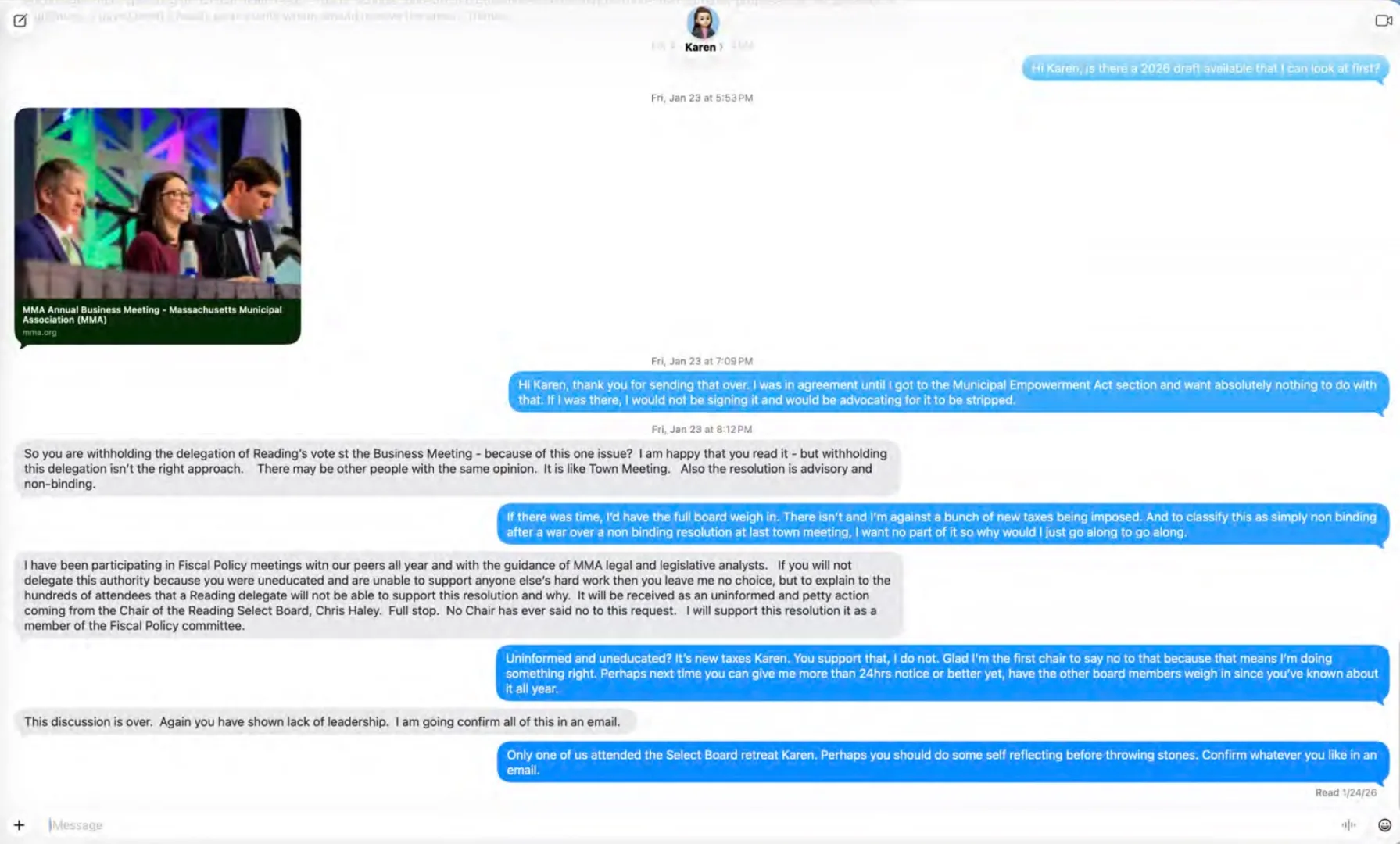
Communications in the Feb. 10 packet show the sequence: The day before the meeting, on January 23, Gately-Herrick sought authorization from Chair Haley to vote as Reading’s representative, providing the MMA link and the staff contact person. Haley reviewed the resolution and declined, citing opposition to aspects including the Municipal Empowerment Act and stating he wanted no involvement. Gately-Herrick indicated she would support the resolution as a Fiscal Policy Committee member. The next day she voted at the MMA business meeting for Reading—despite an email from the chair explicitly stating she was not authorized to do so.
For context, the MMA allocates one vote per municipality (351 cities and towns total), and Fiscal Policy Committee membership does not include a vote.
In the end, the Board chose not to litigate the policy on the fly, instead memorializing the error and instructing that future delegations be formalized ahead of the conference.
Censure Considered but Tabled
A separate agenda item proposed a formal censure of Gately-Herrick for voting “on behalf of the Town of Reading without proper authorization.” Chair Haley indicated that if the MMA letter passed unanimously, he would table the censure, believing she now understood the issue. The Board then voted unanimously to table the censure resolution, opting to address the matter through the letter to the MMA rather than pursue a public sanction.
Public Comment
During public comment, some speakers described the issue as politically motivated in an election year, while others emphasized the importance of following voting protocols to ensure authorized representation of the town.
What is the Municipal Empowerment Act Anyways?
The Massachusetts Municipal Empowerment Act is a Healey-Driscoll administration proposal that would provide cities and towns with additional local-option revenue tools and operational flexibilities. Key elements include raising the local meals tax cap from 0.75% to 1%, increasing the local lodging (occupancy) tax ceiling from 6% to 7%, and allowing a new local-option surcharge of up to 5% on the motor vehicle excise tax (on top of the existing rate), with proceeds potentially directed to stabilization funds or general revenue. All increases would require local adoption.
Outcome
The Board sent the letter to the MMA to record that no written authorization was provided for the vote. The censure item was tabled, and no further action was taken on sanctions.