

Early planning, access, and senior services take center stage in COA discussion
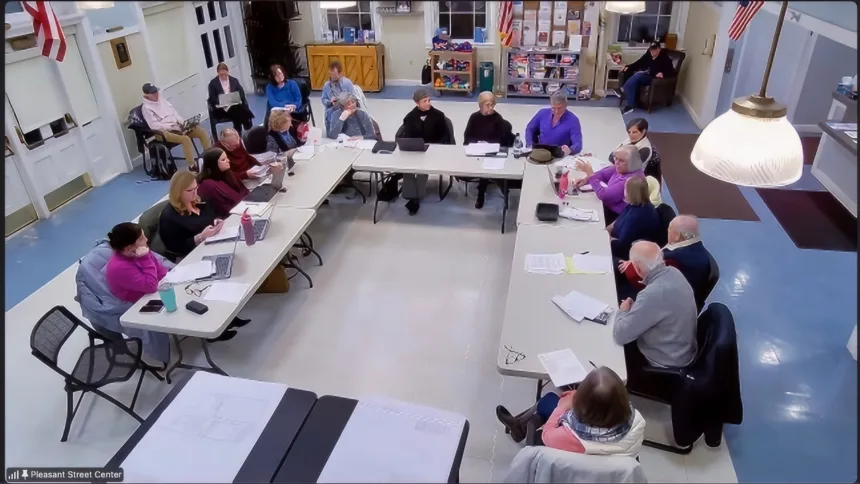
The Reading Council on Aging (COA) held a special January meeting dedicated to an in-depth review of planning and operational considerations for ReCAL, the town’s upcoming intergenerational community and senior center. Discussion focused on findings from the COA Working Group, long-term budget and operational concerns, senior-centered design priorities, and the project’s evolving timeline.
COA Working Group Presents Key Findings
Members of the COA Working Group presented a comprehensive feedback document developed from prior meetings, presentation materials, and recorded discussions. Chair Karen Janowski emphasized that the group’s detailed questions are intentional and reflect the council’s responsibility to advocate for residents age 60 and over, who now comprise a significant portion of Reading’s population.
The working group underscored that ReCAL is an ambitious project bringing together elder services, human services, and recreation under one roof. While similar facilities have succeeded in other communities, members noted that some have faced challenges when senior needs were not fully integrated into early planning.
The earlier you catch things in the project, the more cost savings you realize,” said Ron Powell, a member of the Council on Aging working group.”
Key Concerns: Budget, Operations, and Access
A central theme of the meeting was the need for greater clarity around operational costs and staffing as the project moves closer to completion. Council members expressed concern that while construction planning has advanced, operating expenses—particularly during the anticipated soft opening period in fiscal year 2027—have not yet been fully defined.
The working group recommended developing preliminary operating scenarios that outline likely staffing levels, programming costs, and revenue assumptions. Members stressed that even high-level estimates would help ensure alignment between the building’s design and its long-term functionality.
Transportation and access were also identified as critical issues. Several members noted that the new location may be difficult for some seniors to reach, particularly those living on the opposite side of town. The council emphasized the importance of early planning for transportation options and clear public communication so seniors understand how and when they can access the new facility.
Senior-Centered Design Remains a Priority
While the council voiced strong support for ReCAL as a shared, multi-generational space, members repeatedly stressed that it must function first and foremost as a true senior center. Council members highlighted the importance of:
- Dedicated social and lounge areas available throughout the day
- Programming that reduces isolation and encourages sustained engagement
- Priority scheduling for 60-plus programs in shared spaces
- Clear policies ensuring seniors are not displaced by competing uses
Members also discussed opportunities to strengthen the center’s sustainability, including increased visibility around donations and potential rental use of certain spaces, provided senior access and staffing needs are protected.
Our aim is to help ensure that this project succeeds and meets the needs of older adults while also serving residents of all ages in a sustained way,” said Nancy Ziemlak, a member of the Council on Aging working group.
Timeline and Next Steps
Town staff provided the latest on the ReCAL construction schedule, reporting that bids for the project are expected to open in early February. While a soft opening was initially planned for May 2027, permitting delays have moved the target to August 2027.
Staff reiterated their commitment to continued collaboration with the COA, including regular updates, opportunities for site tours, and further discussion on how the transition from the Pleasant Street Center to ReCAL will be handled.
The Council on Aging’s next regular meeting is scheduled for February 9th.