

Increase helps maintain 60-hour weekly schedule and growing digital offerings
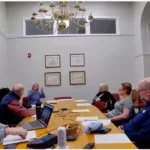
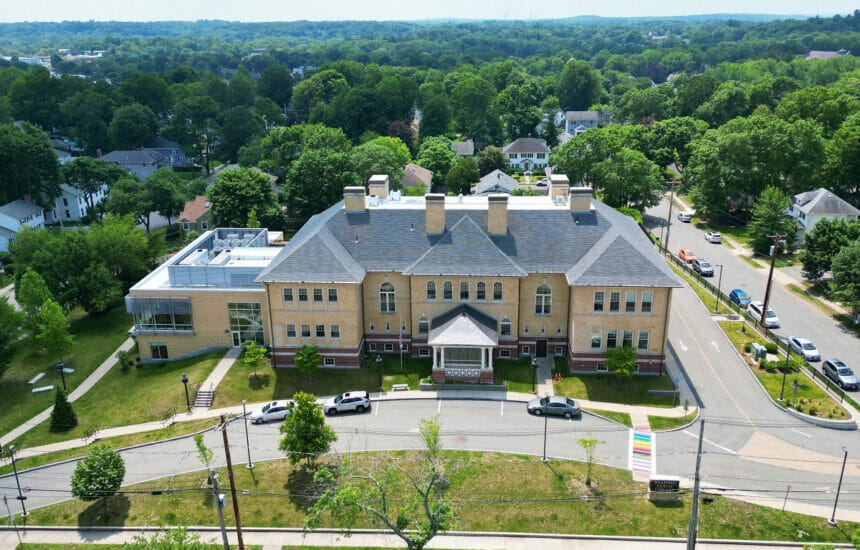
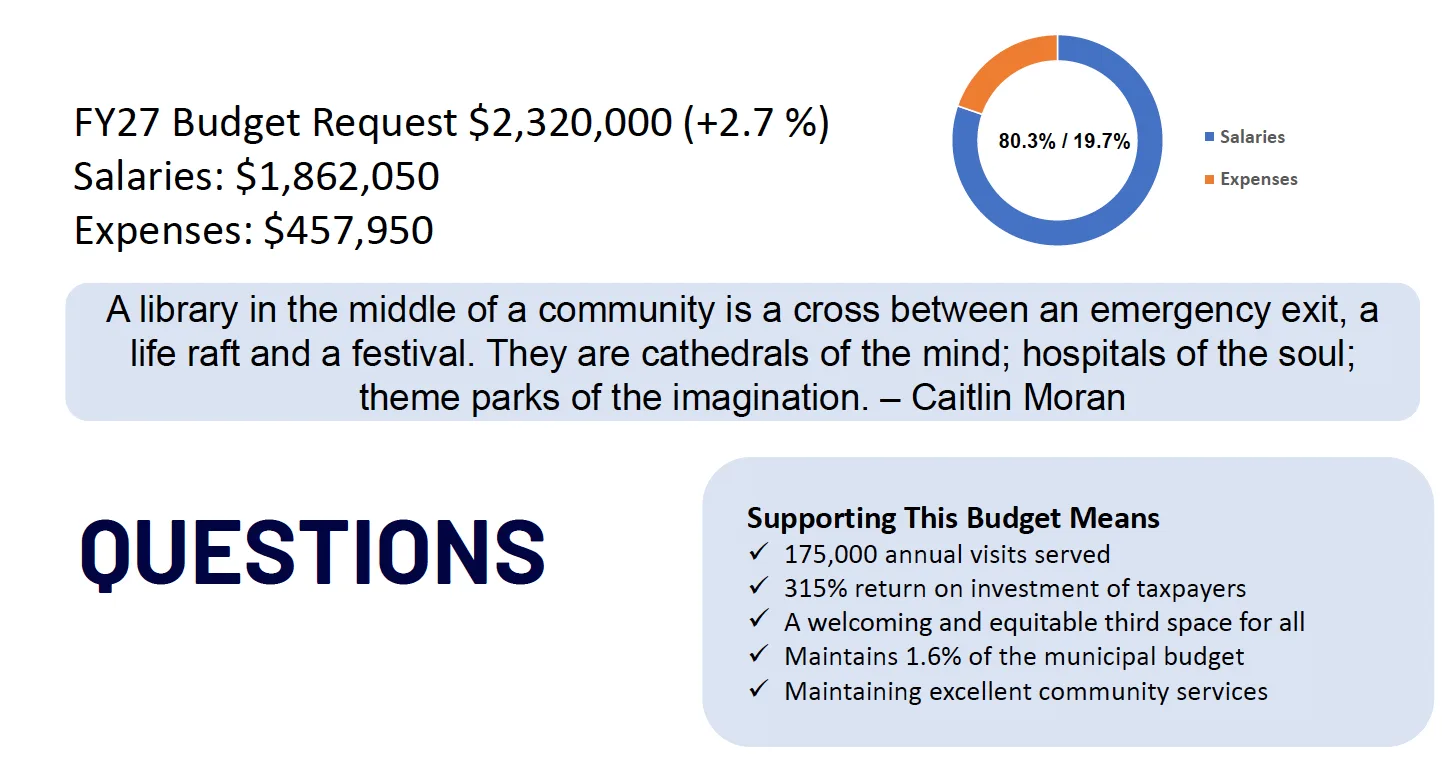
The Reading Public Library is requesting a 2.7% increase in its fiscal year 2027 budget to maintain staffing levels, keep pace with rising costs, and preserve essential services. Library Director Amy Lannon presented the proposal during Tuesday night’s Select Board meeting, emphasizing the library’s role as a vital community hub.
“The library is more than a building with books,” Lannon said. “It’s a true third space where residents can connect, learn, and grow without having to purchase anything.”
Lannon highlighted the library’s impact over the past year: more than 175,000 visitors, 700 community programs, and thousands of transactions for printing, scanning, and research assistance. The library also offers extensive digital resources, including 84,000 e-books, 39,000 audiobooks, and over 30 research databases, plus online tutoring and test prep for exams like the GRE and MCAT.
The proposed budget increase—about $59,950, bringing the total to $2.32 million—is driven primarily by salaries, which account for 80% of the library’s budget. Roughly $52,000 of the increase will fund fair wages for 24.5 full-time equivalent staff during most of the year, rising to 25.2 FTEs when Sunday hours are added for eight months. “Dedicated staff is a great investment,” Lannon said.
Expenses will rise by 1.8%, or about $7,590, largely due to software licensing renewals and certification requirements. To offset these costs, the library is cutting professional development, supplies, and public technology spending, which means stretching the life of public computers a little longer. Materials funding will increase by 2.6% to maintain state certification standards requiring 13% of the budget be allocated to collections.
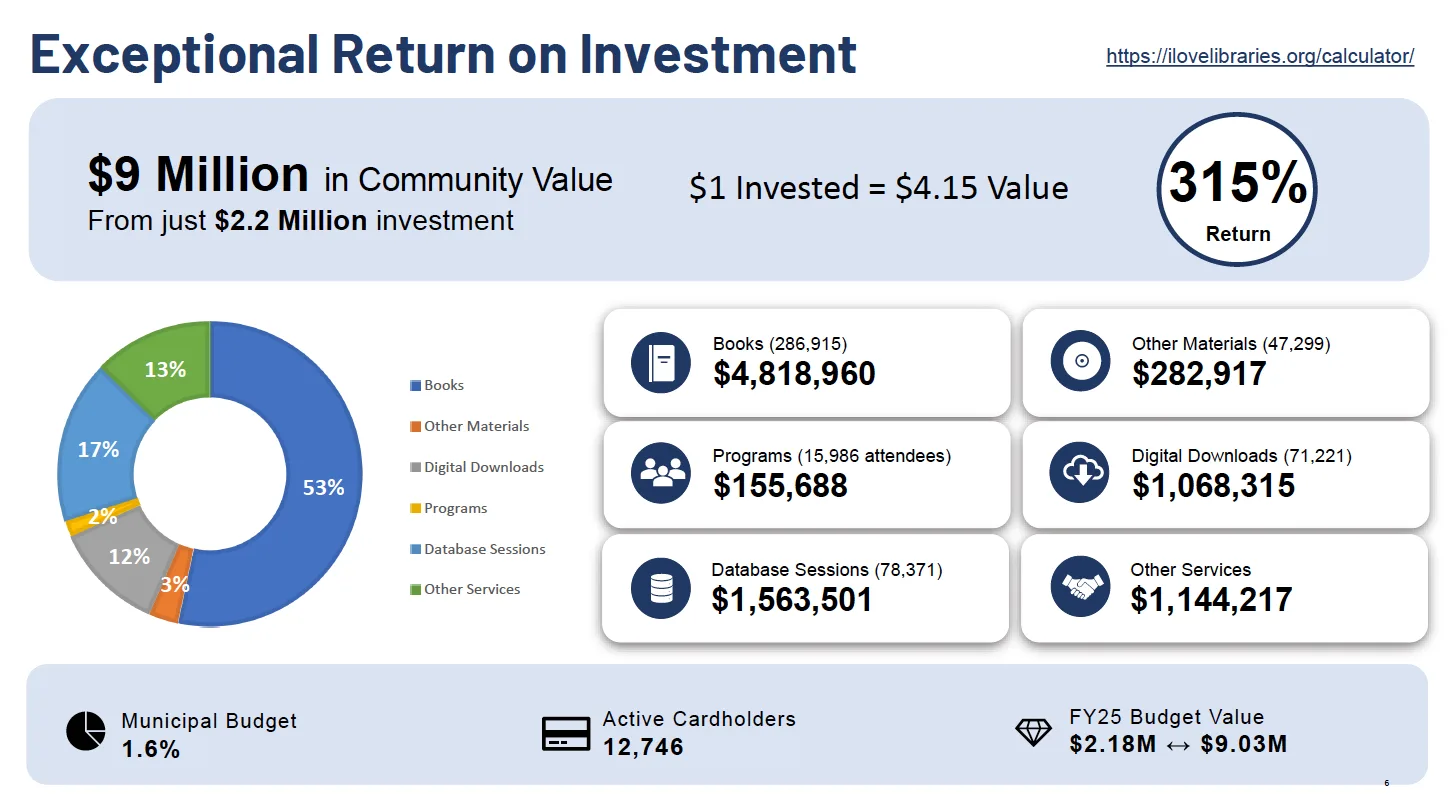
Lannon noted that the library remains an excellent investment, citing an estimated 315% return on investment. “For every dollar invested, the community gets back about $4.15 in value,” she said, pointing to circulation, digital content, and programming.
The library also pursues grants to supplement its budget. In FY25, it received a $20,000 LSTA grant for green programming and outdoor improvements, transforming the library’s green space into a certified wildlife habitat.
Looking ahead, Lannon said the library will continue to balance fiscal responsibility with community needs:
This budget supports fair wages, current collections, and essential services,” she said. “It’s a delicate balance, but we’re committed to meeting expectations.”