

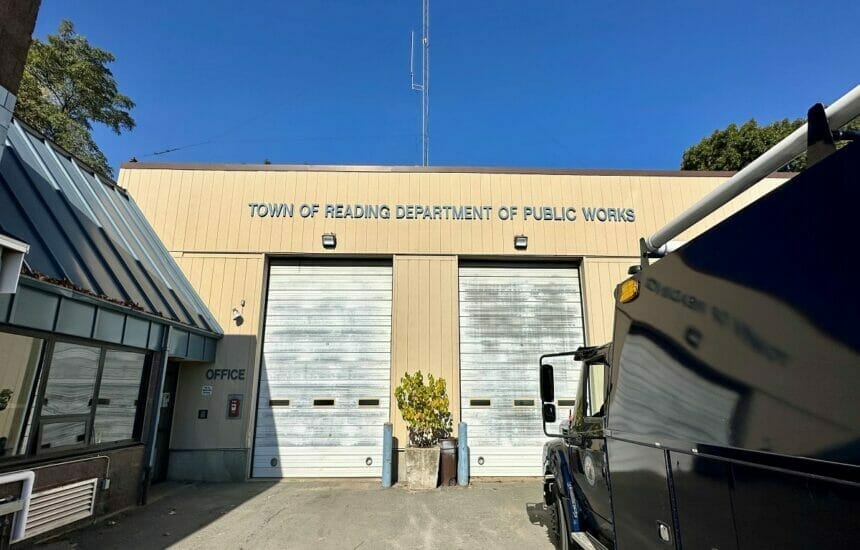
The Reading Department of Public Works is seeking a modest *1.4% increase (revision below) in its fiscal year 2027 budget, aimed at sustaining essential services, addressing infrastructure needs, and managing seasonal workload. DPW Director Chris Cole presented the proposal during last Monday night’s Select Board meeting, emphasizing the department’s role in keeping Reading’s roads, parks, and utilities safe and functional year-round.
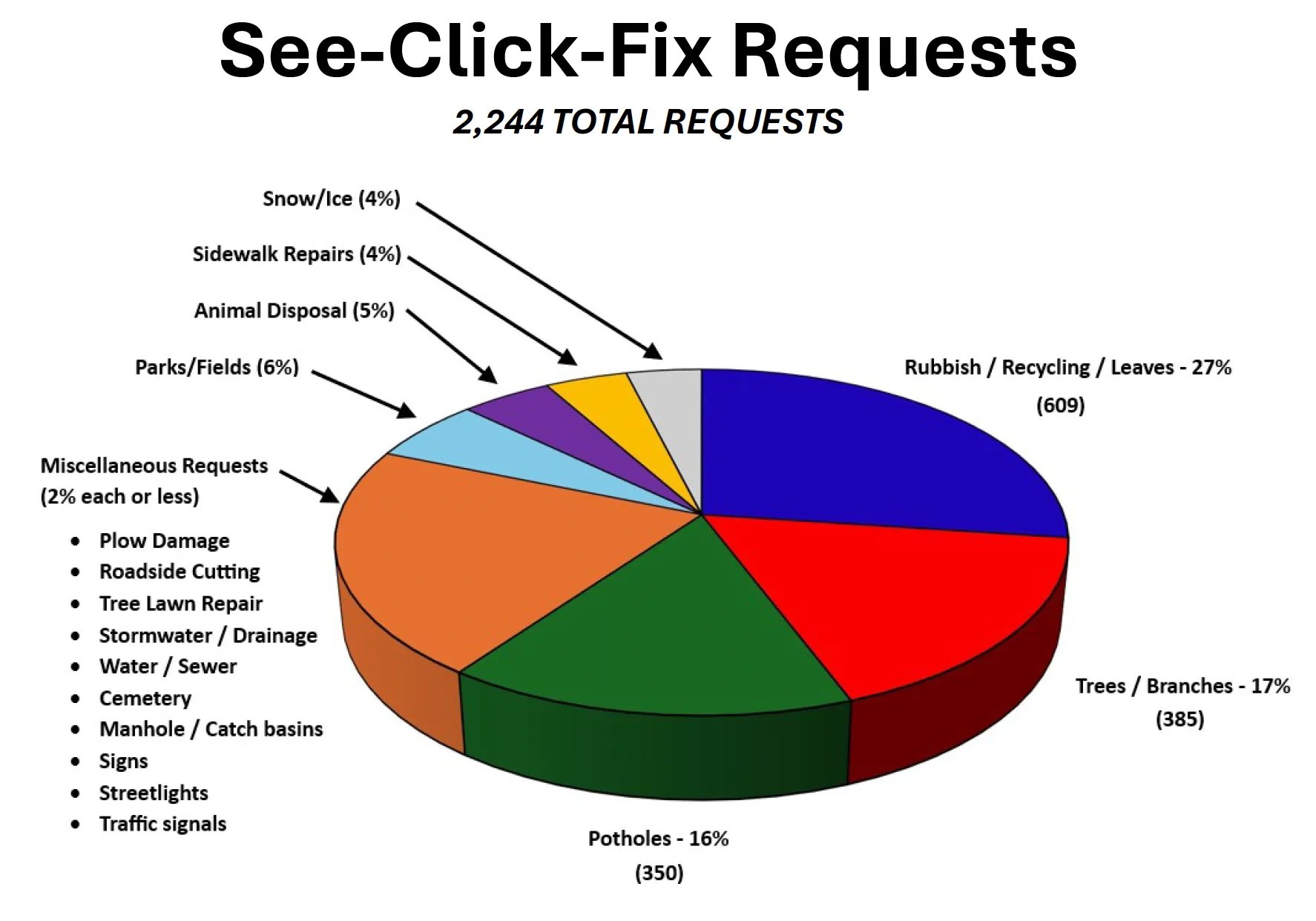
Cole began by highlighting the scope of DPW operations. The department oversees nine divisions—including highways, stormwater, water, sewer, forestry, and parks—with a workforce of 60 full-time employees. In 2025, crews resurfaced 4.7 miles of roadway, repaired 47 sidewalks, rebuilt 52 manholes and catch basins, and responded to more than 2,200 service requests through the town’s SeeClickFix system.
From paving streets to maintaining ball fields, our work touches every corner of town,” Cole said.
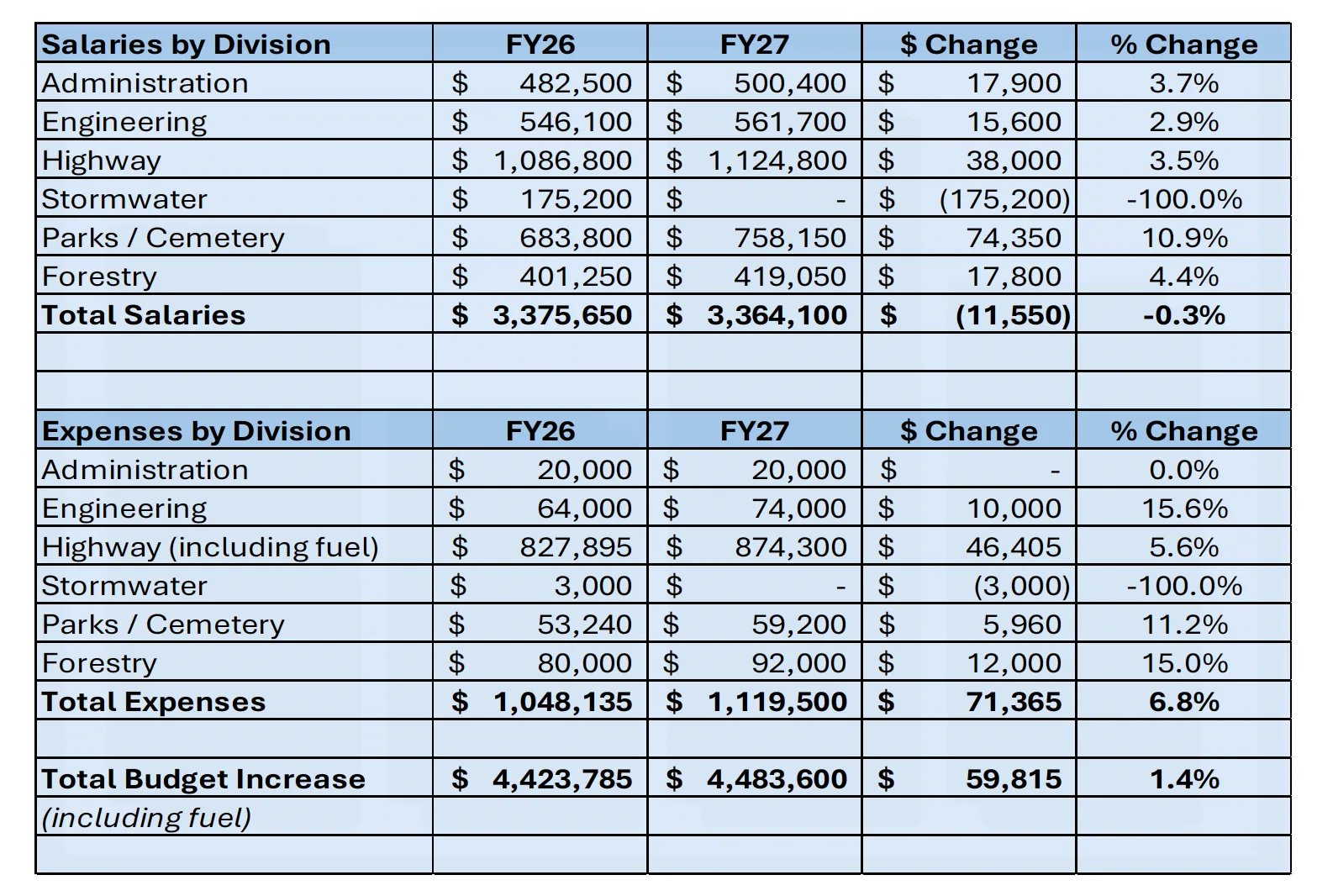
The proposed increase reflects targeted adjustments rather than sweeping changes. Salaries remain largely flat, with a slight decrease due to shifting stormwater wages from the general fund to the enterprise fund. Expense increases include $17,000 for equipment maintenance, $10,000 for sidewalk repairs, and smaller allocations for pothole patching, tree planting, and stump disposal. Cole also requested $31,200 to add a third seasonal employee in parks and cemeteries, citing growing demands on field maintenance and landscaping.
Stormwater expenses—about $3,000—will also move to the enterprise fund, along with $180,000 in wages for five positions. Enterprise budgets for water and sewer anticipate 3–4% increases tied to MWRA assessments and routine system upkeep, including valve and pipe replacements and infiltration prevention.
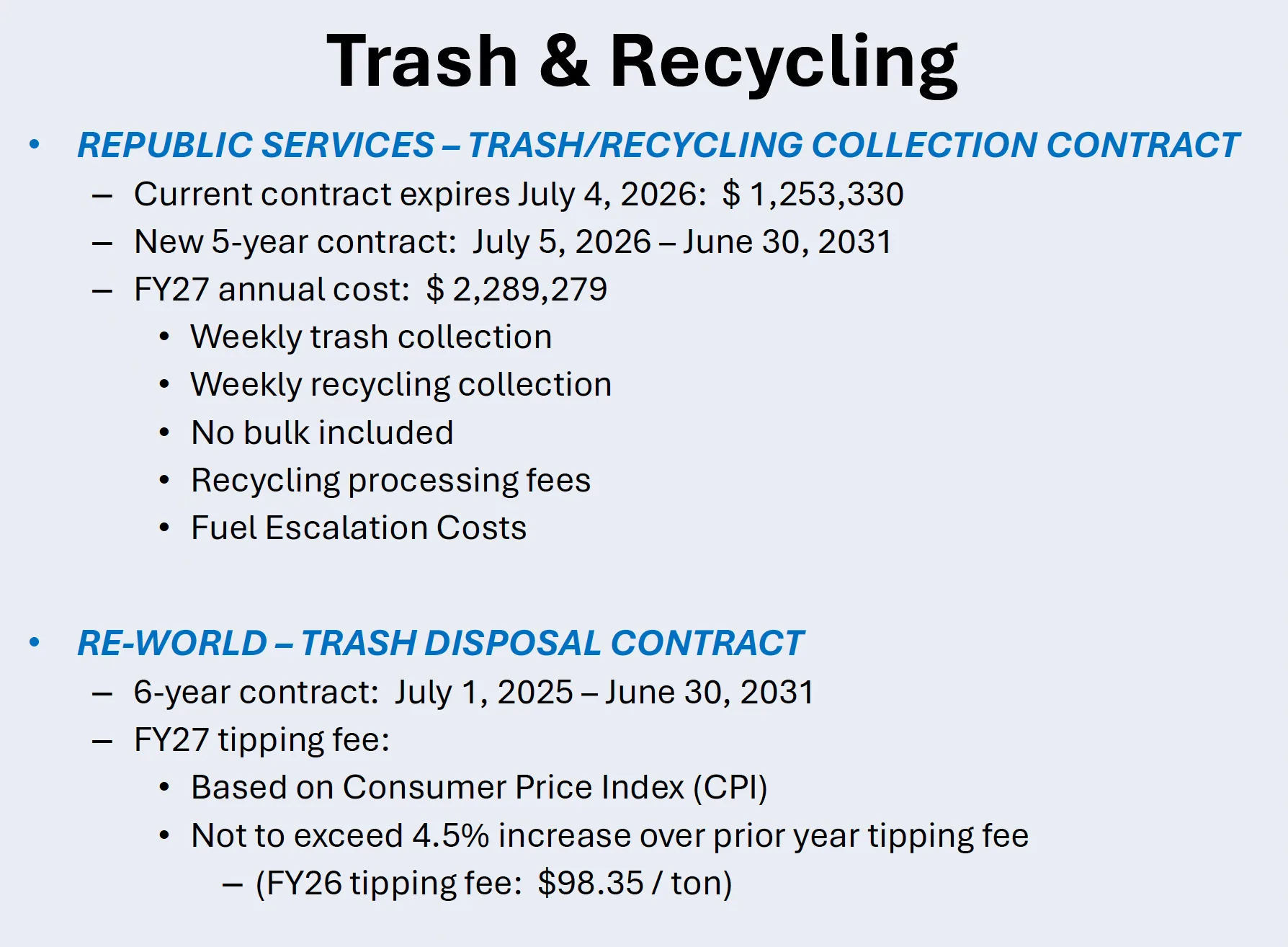
Cole noted that DPW’s responsibilities extend beyond roads and pipes. The department manages snow and ice control, street lighting, and trash and recycling contracts. Snow removal alone can cost $20,000 – $100,000 per storm, while the new automated trash collection contract starting in July will drive a 39% increase in solid waste costs. “We’re doing everything we can to keep these services reliable while controlling costs,” Cole said.
Looking ahead, Cole stressed the importance of maintaining service levels despite fiscal pressures:
Our goal is simple: keep Reading safe, clean, and moving,” he said. “This budget gives us the tools to do that.”
*According to comments made by Chief Financial Officer Sharon Angstrom at last night’s (December 9, 2025) Select Board budget meeting, the proposed 1.4% increase may actually be 4.07%. Mrs. Angtrom explained that salaries for Stormwater Department employees were inadvertently omitted from the revised budget figures.