


Department cites need for proactive policing and expanded safety programs
The Reading Police Department is asking for a modest 2.59% increase in its fiscal year 2027 budget, citing the need to maintain full staffing, expand officer training, and continue popular community programs. Deputy Chief Christine Amendola presented the proposal during Monday night’s Select Board meeting, framing the request as essential to keeping Reading proactive and safe.
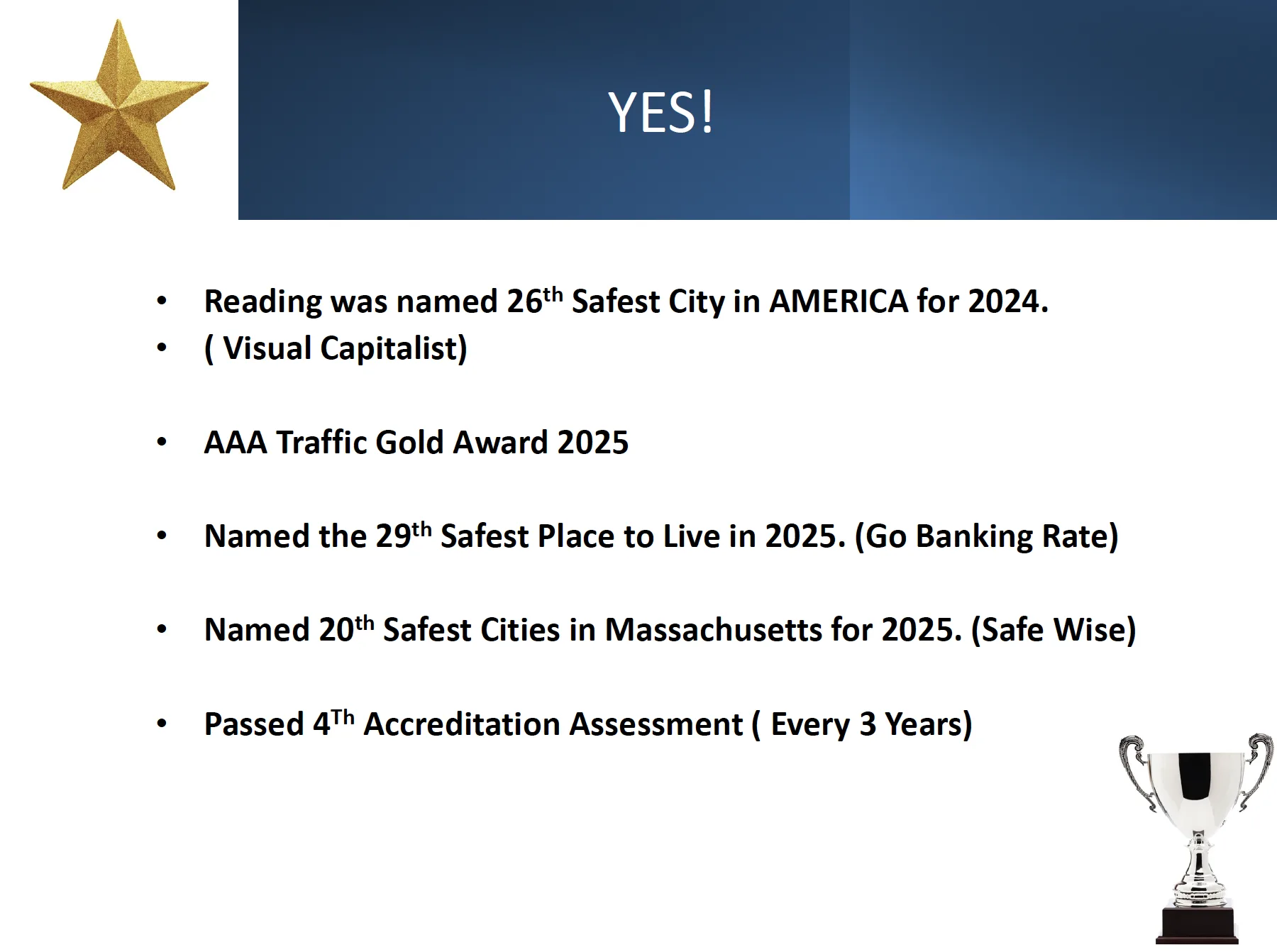
Amendola began by highlighting the department’s achievements over the past year. Reading remains fully staffed with 46 sworn officers—a rarity in Massachusetts—and continues to rank among the safest communities in the state and the nation. The town earned recognition as one of the top 20 safest municipalities in Massachusetts and received the AAA Gold Award for traffic safety initiatives.
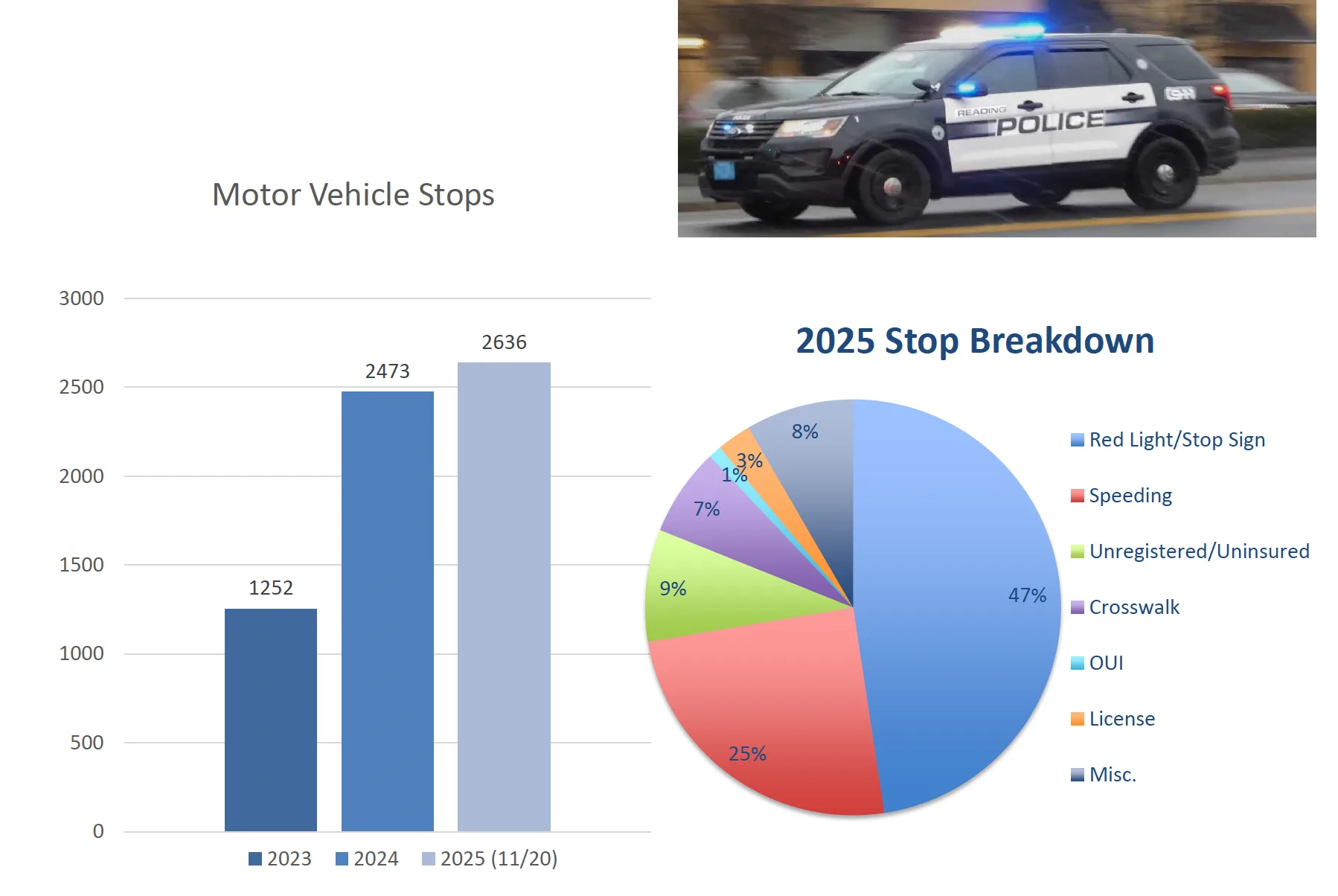
The department expects to handle roughly 20,000 calls for service this year, with domestic disturbances and mental health-related calls among the most frequent. Traffic enforcement remains a priority, with more than 2,600 motor vehicle stops recorded in 2025. Crash responses are down about 13 percent from last year, which officials attribute to stepped-up enforcement.
Amendola also spotlighted Reading’s growing slate of community programs, from the Youth Police Academy for middle schoolers to helmet citation rewards for children and new senior-focused events such as karaoke and bingo.
We’ve spent years building relationships and trust,” she said. “We don’t want to go back to being reactive.”
The proposed budget increase is driven largely by overtime costs for town events—including the Fall Street Fair, Pride Parade, and Winterfest—and by advanced training requirements. Reading has invested in in-house certified instructors for de-escalation, firearms, CPR, mental health first aid, and active shooter response, a move that helps the department meet state mandates and maintain accreditation. The department also plans to continue covering police academy tuition, about $3,000 per recruit, to attract top candidates in a competitive hiring market.
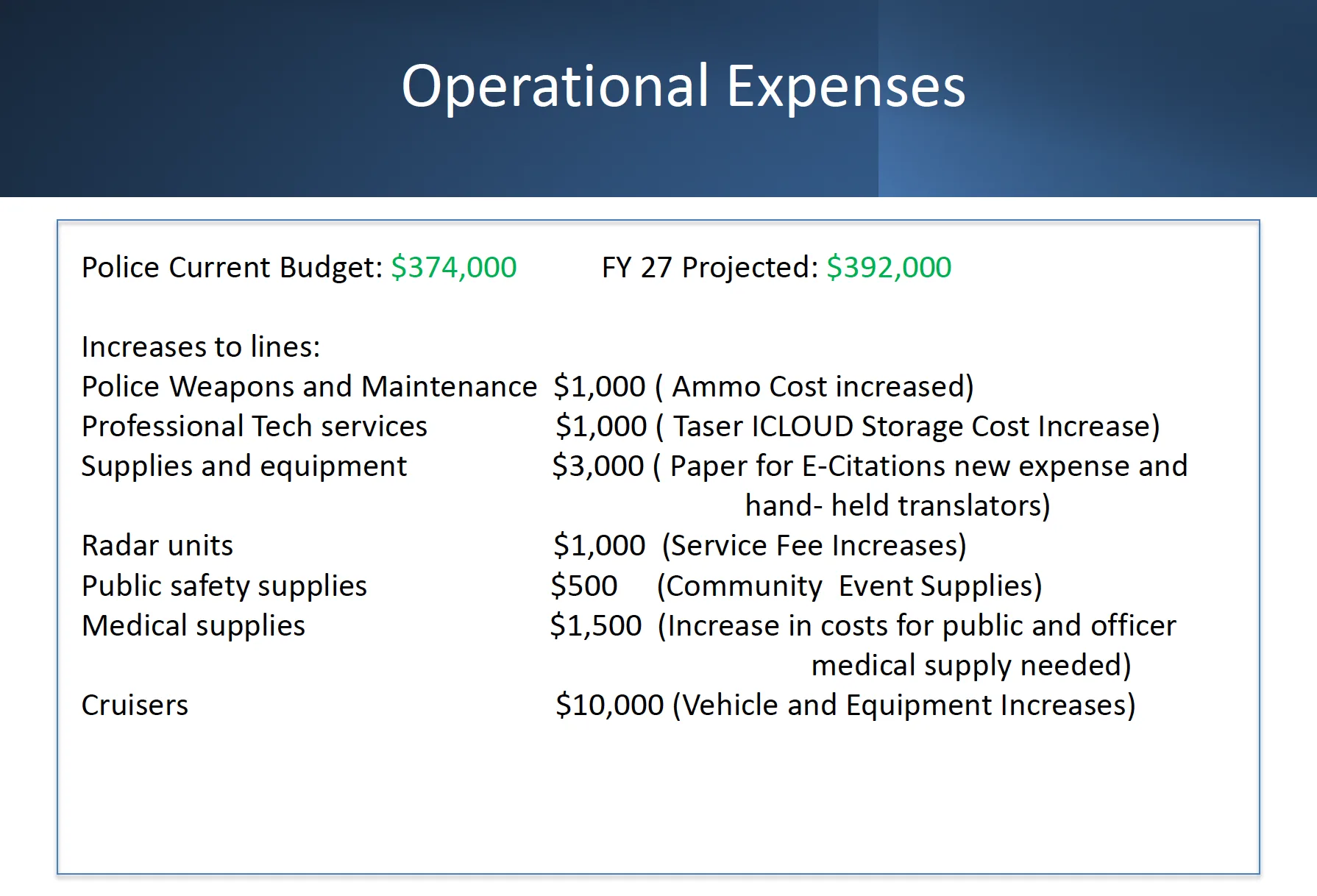
Operational costs are rising as well, from ammunition and cruiser outfitting to technology upgrades. Public records requests have surged 45 percent over last year, adding administrative strain. Despite these pressures, Amendola stressed that the department leverages grants and partnerships to offset costs, noting that programs such as RAD self-defense classes and the Youth Academy receive outside support.
Looking ahead, the department’s goals for FY27 include sustaining proactive policing, strengthening community trust, and supporting officer wellness amid demanding schedules.
If you call 911, we’re coming,” Amendola said. “But we never want to slip from proactive to reactive.”