

Appeals, Amendments, and a Failed Postponement: Inside Reading’s Charter Clash
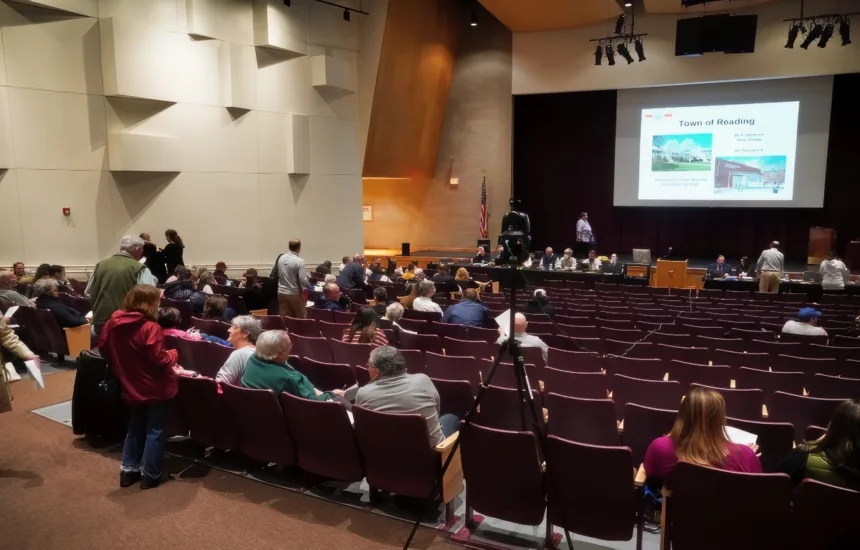
A spirited and, at times, contentious debate unfolded at Monday night’s Town Meeting as members tackled proposed amendments to the Reading Home Rule Charter. The discussion, which spanned more than two hours, centered on Articles 8 and 9 of the warrant — measures that would update the charter for the first time in a decade.
The Charter Review Committee, chaired by Select Board member Chris Haley, presented a comprehensive slate of changes, most of which were technical updates such as replacing gendered language with gender-neutral terms and changing “Board of Selectmen” to “Select Board.” However, several proposals sparked deeper deliberation, including:
- Definition of Majority Vote: A proposed change would allow decisions by a majority of members present and voting, rather than a majority of the full board. Supporters argued this aligns with state norms and eases governance when vacancies exist. Opponents warned it could enable a minority of a body to make major decisions, calling it “short-term gain, long-term pain.”
Lowering the threshold for a majority vote might seem convenient now, but it undermines accountability. If we can’t fill seats, we should find new members, not lower the bar” said John Arena of Precinct 1.
- Appointment Committee Composition: Language clarifying how Finance and Bylaw Committee chairs participate in reappointments raised concerns about conflicts of interest. An amendment to require the substitute appointee to be a current committee member narrowly failed after a standing vote (69–79).
- Social Media as Official Notice: Ryan Johnstone of Precinct 7 proposed adding social media to the definition of “local news medium,” alongside the official town website. The motion failed for lack of a second, though the committee noted that notices on the town’s website remain the authoritative source.
Procedural Drama and Moderator Challenge
Halfway through the night, Thomas Wise proposed an amendment to section 2.12.1 of the charter to change the composition of the Finance Committee’s appointing panel by replacing “the chair of the Finance Committee” with “the chair of the School Committee.” His reasoning was that the School Committee oversees two-thirds of the town’s budget and should have a voice in Finance Committee appointments.
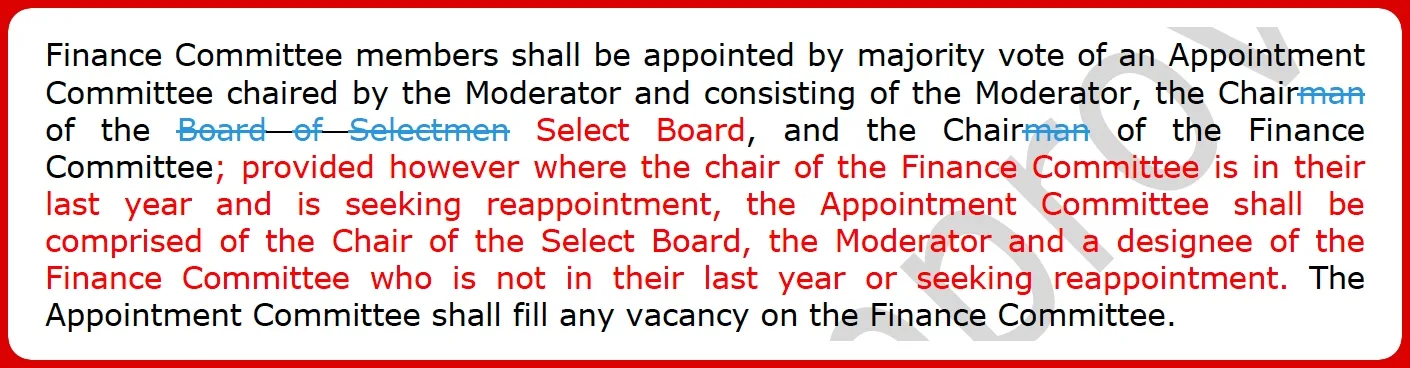
Moderator Alan Foulds ruled this amendment out of order because it went beyond the scope of the warrant article, which only addressed preventing a conflict of interest when a chair is voting on their own reappointment—not changing which boards are represented on the appointing committee. Foulds explained that such a change would require prior notice and inclusion in the warrant for a future town meeting.
This debate would end up featuring a rare procedural twist. When Moderator Foulds ruled the amendment by Wise out of order, members questioned whether Town Meeting could override that decision. Town Counsel Ivria Fried confirmed that Reading’s bylaws include a provision allowing an appeal of the moderator’s ruling — a seldom-used mechanism.
John Halsey of Beaver Road voiced frustration over the decision:
We’re reviewing proposed changes to the charter. We’re being asked to consider those and ultimately vote on them. Mr. Wise brings up a point that there’s a way to potentially amend something that’s here to actually add clarity and, based on what Mrs. Nazaro said, some common sense. I’m a little perplexed that you would deny a town meeting member the opportunity to propose such an amendment.”
Moderator Alan Foulds responded firmly:
It is the job of the moderator to decide what is within the four corners of the article regardless of what the subject is. And I have ruled on this and I’d like to move on. The ruling is—I feel it is outside the bounds.”
Following prolonged debate, the appeal was narrowly rejected by a show of hands, upholding the initial decision.
Motion to Postpone Fails
Right after the Moderator’s ruling was affirmed, Angela Binda (Precinct 5) moved to postpone Article 8 indefinitely, explaining that the assembly required additional time to examine the proposed revisions. This drew a quizzical retort:
“Why? Why? Why do you want to postpone it indefinitely?” inquired Charter Committee member Jeffrey Struble.
Binda replied with:
I think that if that ruling stands then the entire charter is up for debate. I think that town meetings shall meet four times a year. Can we debate that?”
Her comment suggested she believed the moderator’s ruling opened the door to revising any part of the charter, even unrelated sections like meeting frequency. In reality, the ruling only applied to the specific amendment under discussion. It then had to be pointed out to Binda that the earlier motion to overrule the moderator failed and did not pass, meaning the scope of debate remained limited.
The motion sparked debate over whether Town Meeting should halt progress or respect the committee’s efforts. Several members voiced concern that postponement would delay modernization and gender-neutral language updates that had been in the works since 2017. Ultimately, Binda’s motion failed by a overwhelming margin, allowing the meeting to proceed with consideration of the charter revisions.
Had the motion succeeded, it would have effectively delayed nearly two years of work by the Charter Review Committee, which met biweekly, held public forums, and coordinated with multiple boards to craft the proposed updates. Committee members, including Chair Chris Haley, emphasized that the changes were the result of extensive deliberation and public input.
Finally, Town Meeting voted to end debate on Articles 1 and 2 of the charter and adjourned shortly after 10:40 p.m. The remaining sections of Article 8 and the entirety of Article 9 will return for consideration Thursday night.