


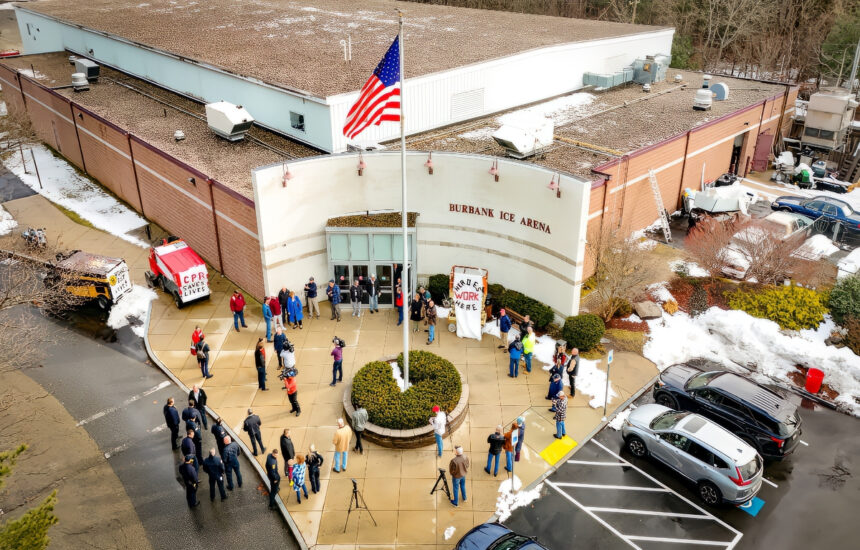
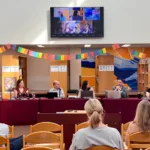
At the August 26, 2025 Select Board meeting, the annual update from the Reading Ice Arena Authority was met with a mix of appreciation and scrutiny. While Authority representative Carl McFadden presented a strong financial and operational report, Select Board Member Karen Herrick responded with pointed questions and a firm tone that stood out from her colleagues. Her approach, while rooted in oversight, drew subtle pushback from fellow board members and was later countered by public remarks from the Northshore Skating Club.
Financial Performance and Community Contributions
McFadden reported that the Burbank Ice Arena had generated over $1 million in revenue this year, with no debt and a reserve fund projected to exceed $300,000 by mid-2026. The rink remains fully booked, supporting youth hockey and figure skating, and has contributed nearly $3 million to the town over its lifetime. He also noted that $150,000 from rink profits had been allocated to support the town’s new pickleball courts.
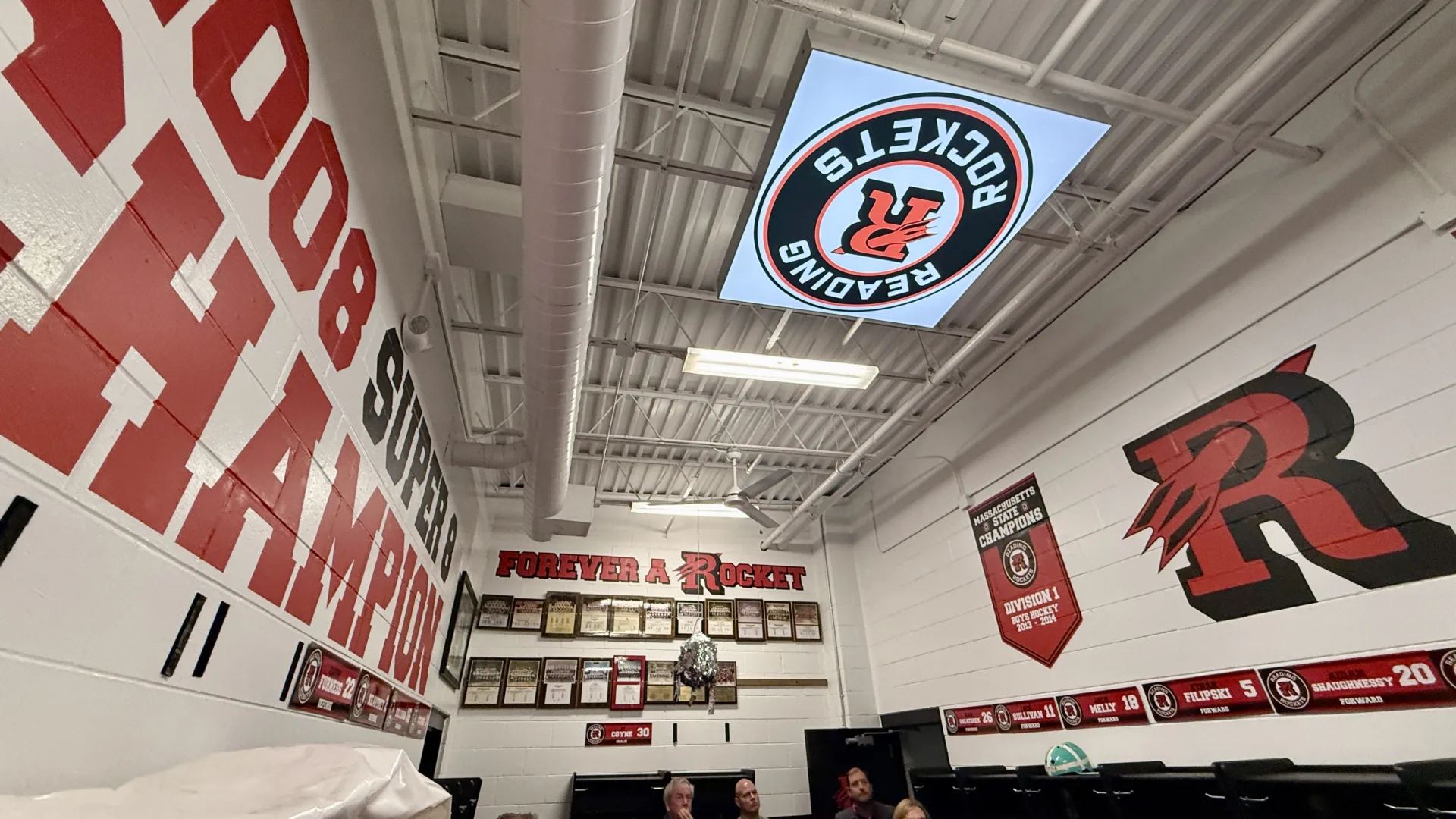
Co-Chair Christopher Haley praised the rink’s zero-cost operation and emphasized its value to the town, noting that Reading does not fund the facility but benefits from its contributions. Board Member Carlo Bacci echoed this sentiment, cautioning against overreach and suggesting that the town’s relationship with the rink should be managed with appreciation and balance.
Oversight and Lease Compliance
Herrick questioned whether the update met the lease’s requirement for a formal operational meeting, expressing dissatisfaction that only McFadden was present. She called for a more structured review involving the full Ice Arena Authority board and suggested that the current format lacked sufficient depth.
While her concerns about process she believed were valid, her delivery came across as rigid and occasionally adversarial. Haley responded by noting that the meeting had been scheduled to allow for extended discussion and that the agenda topic was in compliance with the lease agreement. However, Herrick questioned whether the update met the requirements of the lease, which she interpreted as mandating a formal operational meeting with the full Ice Arena Authority board.
We’ve provided the complete lease provision below, which consists of a single sentence. It does not reference any input from the Select Board or Ice Arena board, only stating that a town representative and Burbank’s shall meet annually to discuss operations as requested. The agenda item, titled “Annual Update from the Reading Ice Arena Authority,” was allocated 45 minutes.

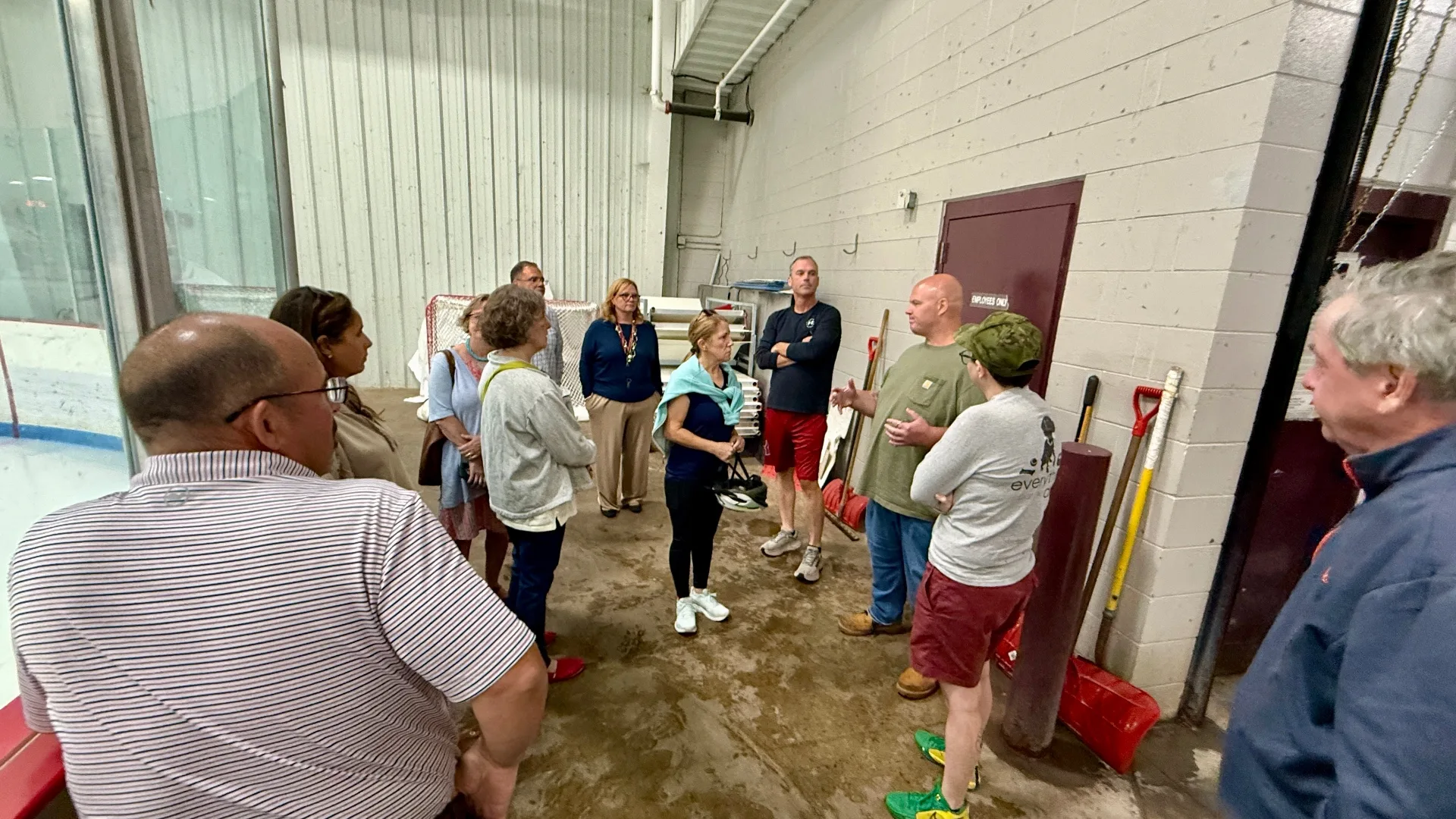
Additionally, the full Select Board and public had a special on-site rink meeting on August 19th with Carl McFadden and Jim Brown, Assistant Manager.
Financial Transparency and Audit Independence
Herrick’s primary focus was on the rink’s financial contributions to the town. She questioned why there had been no rent payment in the current fiscal year and claimed that the town’s auditors were confused by the inconsistency. Although she later clarified that she may have meant the Finance Committee, the implication of financial mismanagement had already been made.
Her remarks on staff salaries—suggesting they were high compared to neighboring towns—were met with quiet discomfort from other board members, who acknowledged the long tenure and multi-role contributions of rink staff, particularly General Manager Ed Peduto. McFadden responded by defending the compensation structure, noting that while other towns like Stoneham pay their rink managers significantly less, those employees are municipal staff with long-term pension liabilities.
“The town of Stoneham has to earmark nearly $3 million in pension liabilities for their rink staff,” McFadden explained. “When Ed or Jim walks out the door, good luck—they’re on their own. We don’t carry that burden, and that’s a long-term financial advantage.”
This perspective reframed the salary discussion, emphasizing the cost-efficiency of the rink’s staffing model and the value of retaining experienced personnel without long-term financial obligations to the town.
Infrastructure and Accessibility Planning
Board Member Karen Rose-Gillis raised practical questions about the rink’s aging ice-making equipment and contingency plans in case of failure. McFadden explained that the rink maintains backup parts and proactive maintenance protocols. Rose-Gillis also inquired about the feasibility of installing solar panels on the new roof, which McFadden said would void the roof’s warranty and was not financially viable.
Herrick added that a capital plan should be developed to identify future risks and costs, and she advocated for improved accessibility in the stands. While her points were valid, her delivery continued to contrast with the more measured tone of her colleagues.
Scheduling Equity and Public Response
Herrick also criticized the rink’s scheduling practices, arguing that Reading skaters are disadvantaged due to later school dismissal times. She suggested that even a modest adjustment could improve access and safety. McFadden acknowledged the issue and noted that the rink was working with the Northshore Skating Club to address it.
Later in the meeting, Northshore Skating Club President Jackie Gagnon and Treasurer Stephanie Solano spoke during public comment, offering a strong endorsement of the rink’s management and facilities. Gagnon emphasized that the club was “happy” with its relationship with the rink and praised the staff’s responsiveness, professionalism, and investment in the club’s success. Solano added that the rink was consistently clean, well-maintained, and accommodating to skaters with disabilities.
Their remarks appeared to directly counter Herrick’s implication that community stakeholders were dissatisfied, reinforcing the rink’s reputation as a valued and well-run facility.
Wrap-up
The Ice Arena update provided valuable insights into the facility’s operations and finances, but the meeting was marked by Herrick’s persistent and critical tone. While her concerns reflected a desire for stronger oversight, her delivery drew mixed reactions and was tempered by more collaborative feedback from fellow board members and public praise from the Northshore Skating Club.
As the town continues to rely on shared resources and partnerships, especially the success of the ReCALC and pickleball projects in the Burbank area, future discussions may benefit from a more unified tone—one that ensures accountability without compromising cooperation.





While her concerns about process she believed were valid, her delivery came across as rigid and occasionally adversarial. Haley responded by noting that the meeting had been scheduled to allow for extended discussion and that the agenda topic was in compliance with the lease agreement.
This sounds like really unbiased reporting! Thanks!
That’s exactly what occurred, which is why we shared the lease provision for all to review. You’re welcome to watch the meeting yourself.
This is definitely NOT an unbiased news article. This is an opinion article, albeit with facts to back up the opinions expressed.
Thank you for verifying that this article is fact-based. Opinions are not facts, as they cannot be proven. This is why we shared the actual lease, allowing you, the reader, to review the facts directly.